
What is the best stone for a fireplace surround?
You’re attempting to choose the ideal stone for your fireplace surround. With so many choices available, each one radiating its own appeal and character, the decision can seem taxing. But relax,at HRST here as usual to assist in somewhat simplifying your decision-making.
Marble, granite,and limestone are three often used stones for a fireplace surround; all are great possibilities.
This deep dive will examine every stone’s particular qualities, fascinating history, advantages and drawbacks, and environmental impact.
By the end of this read, you should ideally know which stone would fit your fireplace surround and complement your style and requirements. We have also included some of our favourites to get you going.
Is marble good for fireplace surround?
Like giving your place a little luxury? Let’s discuss marble now. For millennia, this has been the go-to stone when sophistication and grace rule the day.
Marble is so amazing because every piece has a story and unique veins and swirls that accentuate any space to create dramatic beauty. Moreover, it’s really good with heat, which makes it a hot option for a fireplace surround.
What is the origin of the marble?
Marble first forms from limestone. Deep under the crust of the earth, the limestone is under great heat and pressure deep under the earth’s crust, transforming into the graceful rock we know and enjoy. We get the exquisite, swirly patterns that define marble via this transforming process, which causes the limestone to crystallise.
Ever considered where the name “marble” originates? From the Greek word “Marmaris,” which means “shining stone,” A suitable name given marble’s classic gloss after polishing.
Marble was especially prized by the ancient Greeks and Romans, who used it to produce their striking monuments and well-known sculptures, such as Michelangelo’s “David.”
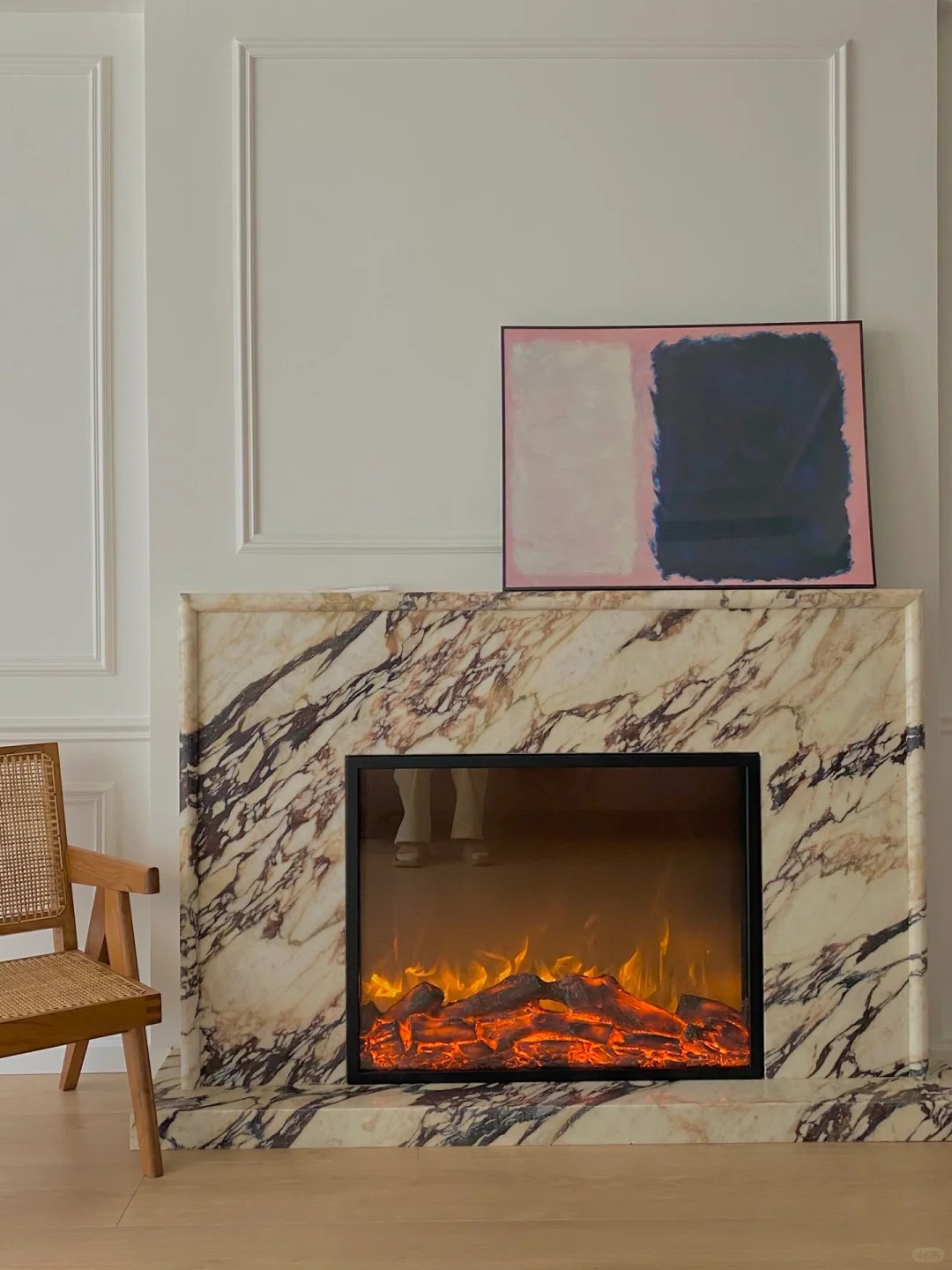
A marble fireplace surround’s toughness?
Marble could seem strong, but do not be misled. On the Mohs scale, which geologists use to gauge rock hardness, it’s on the softer side, scoring between a 3 and 4. This facilitates the carving of delicate forms and complex patterns. It also lends that wonderful gloss. It can, however, also be somewhat of a scratch magnet.
From what source does marble originate?
Mediterranean nations, including Italy, Spain, and Greece, provide much of the marble used here. And every area presents its marble in a particular manner, using varied colours and vein patterns. Big slabs of marble are extracted from the ground, and over millennia, humans have been improving their skills in this regard.
Is marble a sustainable resource?
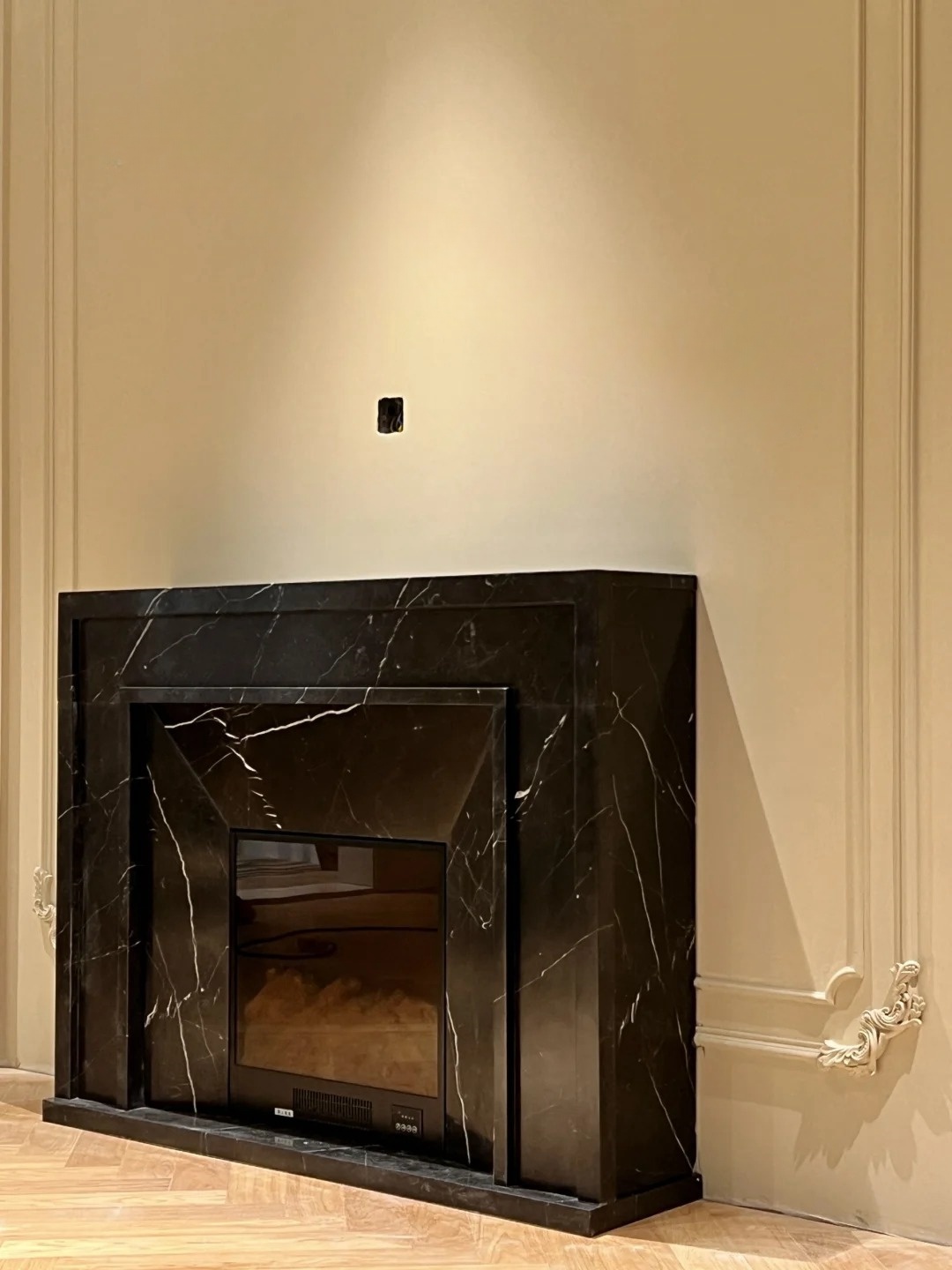
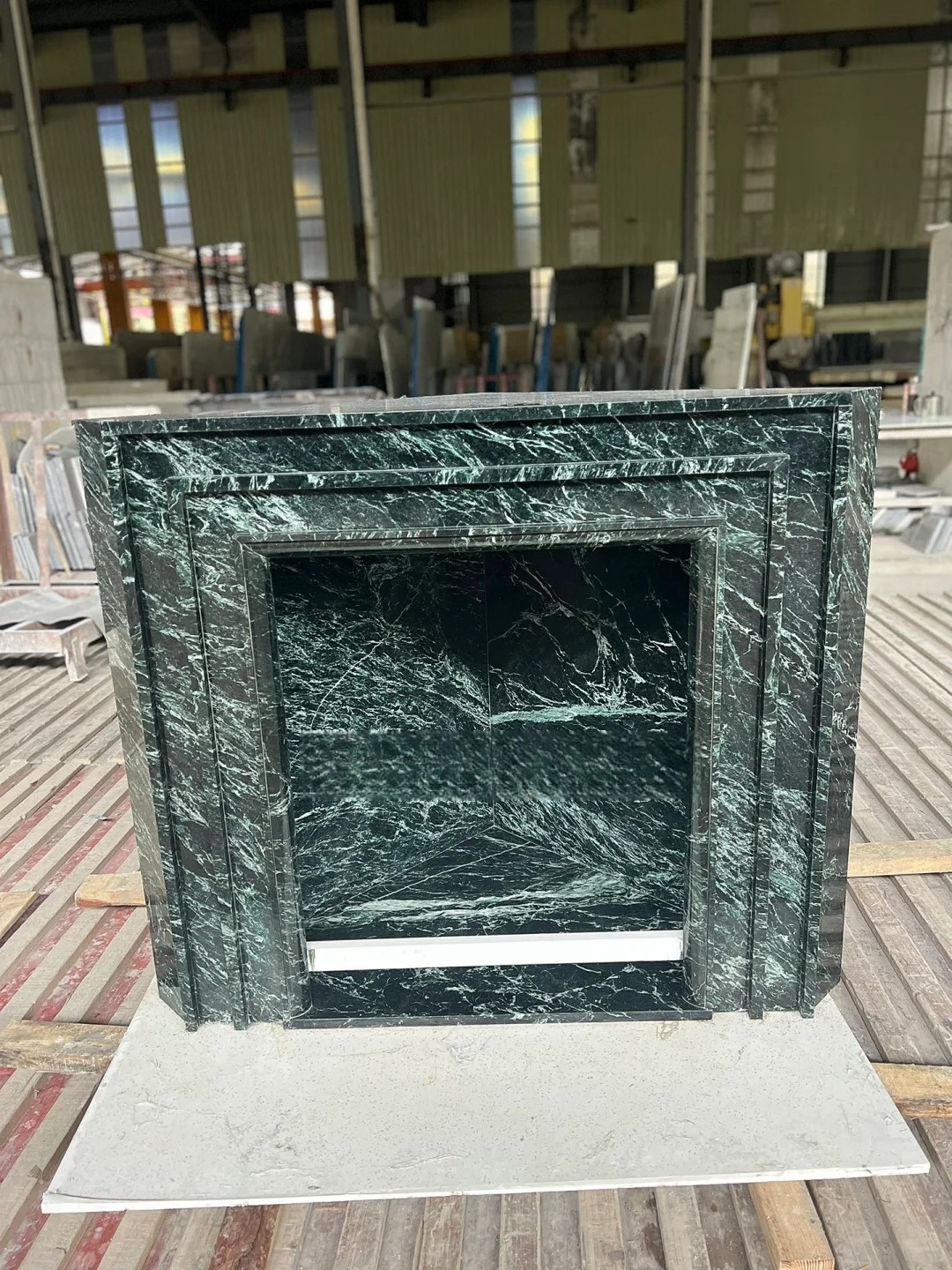
Marble is a champion if you want something opulent but environmentally responsible. It’s plentiful and simple to extract. Besides, it’s all-natural and requires less energy-guzzling processing than synthetic materials. So, it’s important to make sure your marble comes from quarries using environmentally friendly methods.
 |
 |
 |
Benefits:
It exudes grace and sophistication.
Provides ideal for fireplace surround—heat-resistant qualities.
Every piece has a one-of-a-kind design because of the individual veins and swirls.
Cons:
It needs some regular care to stay beautiful.
Compared to other stone choices, it can be expensive.
If neglected, it can etch or discolour.
Granite fireplace surround: strong but elegant
Want a sturdy and attractive fireplace? Now let us enter granite. Top choice for fireplace surround stones is this incredibly strong and heat-resistant stone. It’s very easy to clean and stains hardly.
And everyone may find a granite style among the many colours and designs. adore black granite’s dramatic appearance? Alternatively you could be more drawn to the subdued range of softer colours. Granite will cover you either way.
What is granite made of?
Granite is a light-colored plutonic rock found throughout the continental crust, most commonly in mountainous areas. It consists of coarse grains of quartz (10-50%), potassium feldspar, and sodium feldspar. Actually, created from the slow cooling of lava deep under the ground, geologists refer to this type of rock as igneous. Granite is made extremely tough by this slow-motion change under great strain. Actually, of natural stones available, this is among the most durable ones.
Where did the name originate?
Granite derives from the Latin “granum,” meaning “grain.” This pays homage to the grainy appearance of the stone derived from the combination of feldspar, quartz, and mica that define granite. And depending on the ratios of various minerals, it can exhibit a great spectrum of colours and patterns.
Granite has long been rather fashionable. For their buildings—including obelisks and even portions of the Great Pyramids—the Ancient Egyptians loved it. Its unparalleled availability and strength made it the perfect choice.
How tough is granite?
Granite shows great resistance to scratching by scoring a solid 6-7 on the Mohs hardness scale. Low porosity also makes it stain-resistant and ideal for places like kitchen worktops, which see a lot of activity, and, naturally, fireplace surrounds.
Where does the granite come from?
Granite is found all across the world; prominent sources are Brazil, India, China, and portions of the United States including Vermont and North Carolina. From India’s deep black variation to the speckled patterns of Brazilian granite, every area’s granite has unique qualities.
Granite is a green building material?
You’re lucky if you want sustainable materials for your house; granite has ecological qualities. It is copious and long-lasting, so lowering waste. Like marble, though, be sure your granite comes from quarries that practise environmental stewardship.
The pros are great durability and heat resistance.
- Great durability and heat resistance.
Easily cleaned and resists stains.
comes in many varied hues and designs. - Some conventional house designs might not be suited for it.
It’s heavy, hence you need have an expert install it.
Depending on the kind you go upon, it can be costly.
Limestone fireplace surround: traditional appeal
Looking to give your house a little homey appeal? Your response might be limestone. Your house gains a little rustic comfort with its earthy tones and interesting texture.
It’s also adaptable, suited for both old-fashioned and contemporary designs. Now that your living room is softly lit with warm colours from a limestone fireplace surround, you have a peaceful atmosphere.
limestone is a substance
Made over millions of years from layers of marine life like shells and coral accumulating and compressing on the ocean floor, limestone is a sedimentary rock. Calcium carbonate, a naturally occurring chemical that lends the limestone its special characteristics, fills these strata. And given that it originates from aquatic life, the stone may show fossil imprints. These bring a little of natural history right into your house and create amazing patterns.
In terms of colour, limestone usually stays to warm tones including beige, cream, and light grey. But the makeup of the stone and where it was quarried greatly affect the exact colour and pattern. For classic British building, English Cotswold limestone’s blue-grey tones are, for example, a mainstay.
How tough is limestone?
With a Mohs hardness scale value of about 3, limestone is softer than granite and marble. This softness makes carving and shaping simple, which is a feature that has made architectural detailing over time a popular choice. There is a drawback, too; it is also more likely to sustain wear and scratches.
Where is limestone extracted from?
Although limestone is found all over the world, most of the limestone for fireplace surrounds comes from Turkey and Portugal. The UK, France, and the US also quarry it.
Building and decorating have long used limestone extensively. Some limestone is found in many ancient buildings including the Parthenon of Greece and Egypt. Moreover, limestone is plentiful and easy to work with, hence many of the great castles, churches, and monuments built worldwide were composed of it.
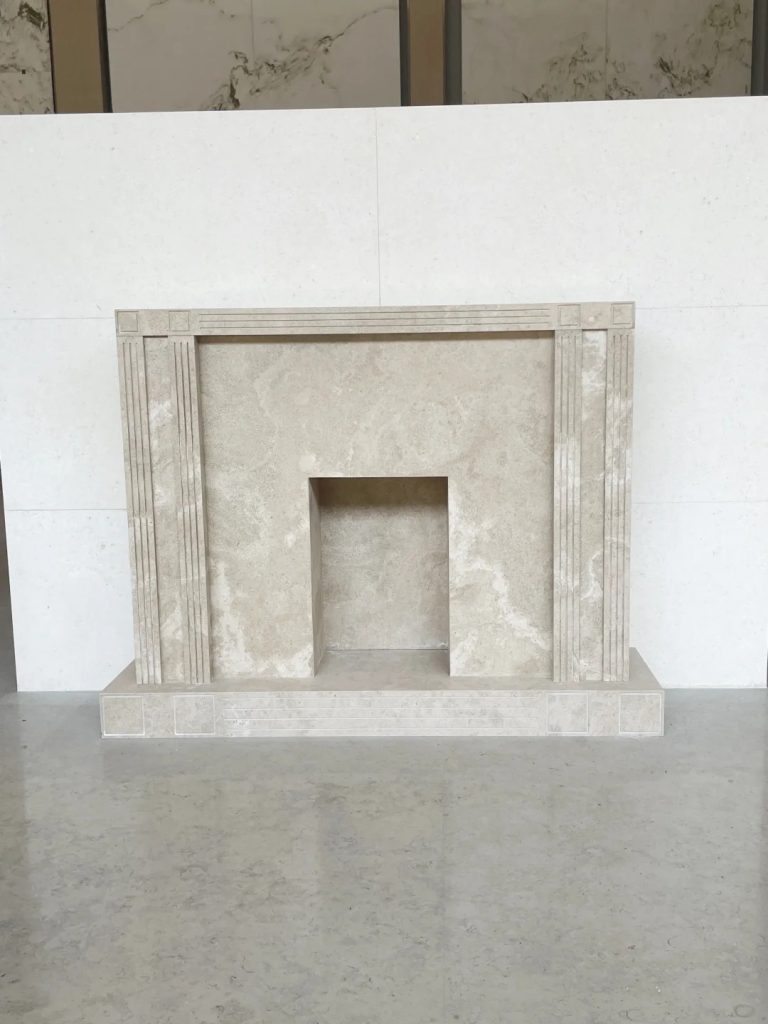
Is limestone environmentally friendly?
From an environmental standpoint, limestone is abundant and easily accessible, so reducing the impact on ecology connected to transportation. Like other stones, though, make sure your limestone comes from a conscientious quarry that reduces waste.
Benefits include your house will have a rustic and friendly appeal.
Extreme flexible, suited for both traditional and contemporary designs.
Generally speaking, less expensive than granite or marble.
Cons: More likely to discolour as more permeable than other stones.
Requires consistent maintenance and sealing.
The softness of the stone could cause over time chips or scratches.
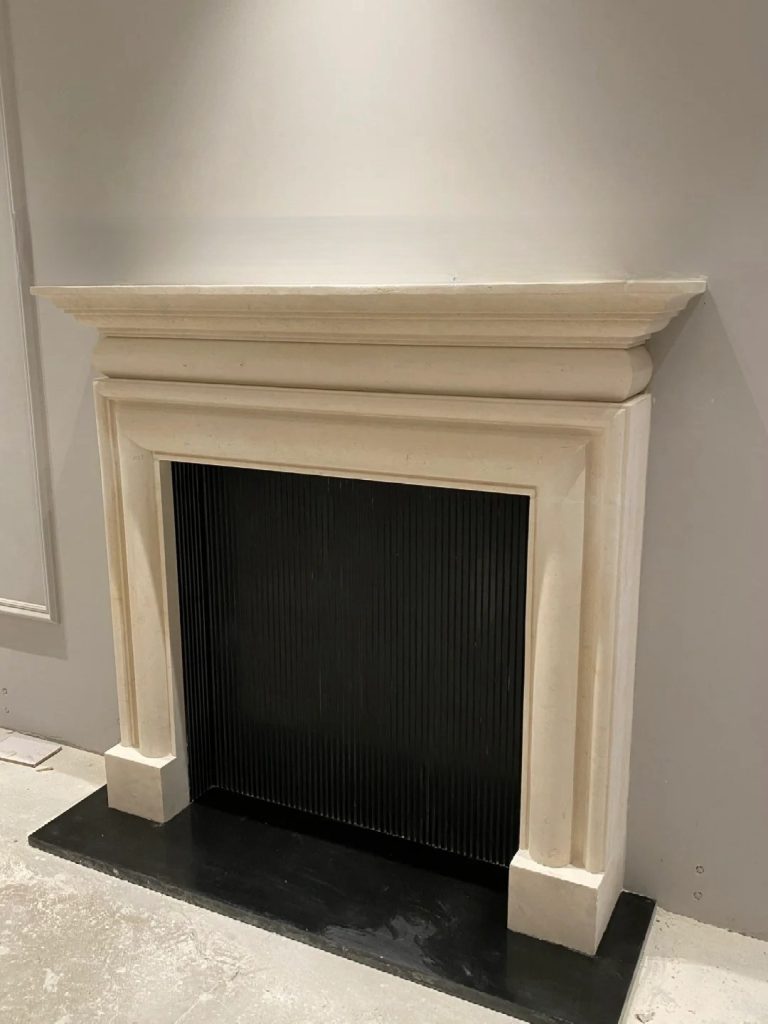 |
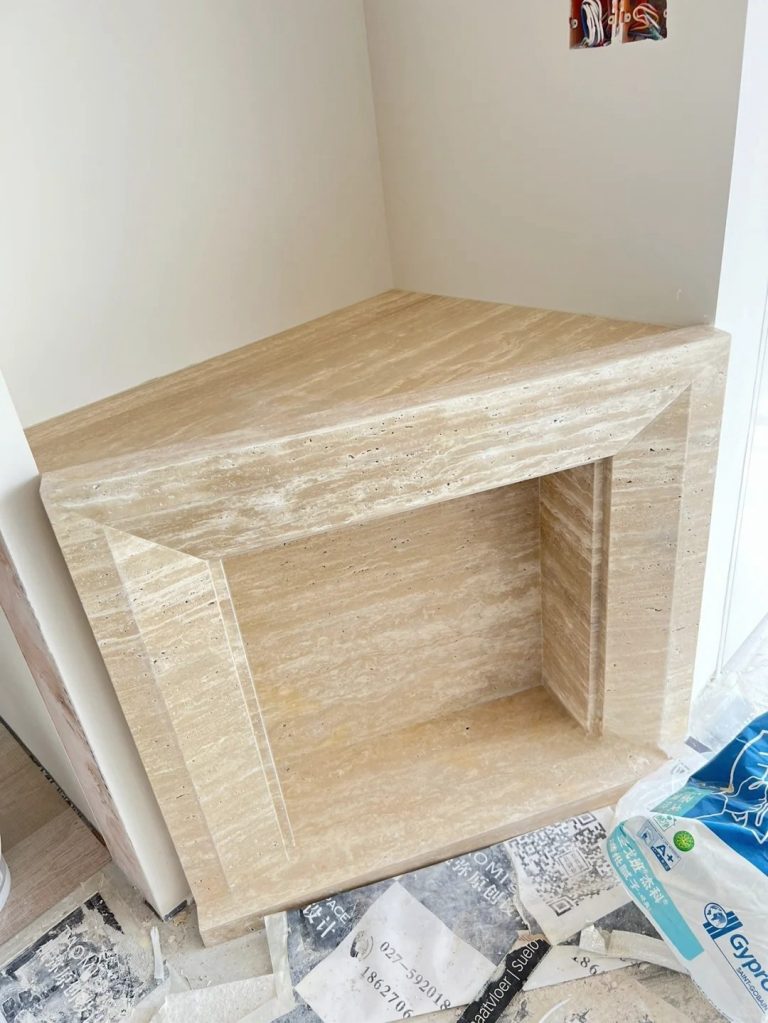 |
FAQs
1. What is the best stone for a fireplace surround in terms of style and long-term appeal?
The best stone is the one that matches your interior style while staying timeless. Marble is often chosen for a high-end, elegant look with natural veining that reads like artwork. Travertine delivers a warmer, more relaxed feeling and works well in natural, Mediterranean, or minimalist spaces. Granite tends to feel bold and structured, and it can suit both classic and modern homes depending on the colour. If you want the surround to feel like a “forever feature,” choose a stone pattern that complements your room rather than competing with it.
2. Is marble a good choice for a fireplace surround, and what should I be careful about?
Marble is a popular choice because it looks luxurious and instantly upgrades the room. The main thing to be careful about is treating it like a premium surface: it can show marks if exposed to harsh cleaners or if you scrub it with abrasive pads. In normal fireplace-surround use, it can perform very well, especially when cleaned gently and maintained with simple habits. Choosing the right finish and keeping the area tidy helps preserve the marble’s clarity and veining.
3. Why do people choose travertine for fireplace surrounds?
Travertine is often chosen because it brings warmth and a natural texture that feels calm and inviting. It pairs beautifully with soft neutrals, wood, and earthy décor, making it a strong option for living rooms that aim for comfort rather than sharp contrast. Many homeowners also like that travertine can create a subtle, organic focal point without looking overly “flashy.” If your goal is a cozy, natural aesthetic, travertine is usually a strong fit.
4. Is granite suitable for a fireplace surround, and what are its advantages?
Granite can be very suitable because it often looks structured and refined while handling everyday life well. It comes in a wide range of colours and patterns, from subtle to dramatic, so it can match many design directions. Many people choose granite when they want a more “confident” visual presence without relying on heavy veining like marble. It is also a common pick for households that want a surface that feels straightforward to live with and easy to keep looking clean.
5. How do I choose the right stone colour for a fireplace surround?
Start with the room’s palette and the kind of mood you want. Light stones can make the room feel brighter and more open, while darker stones create stronger contrast and a more dramatic focal point. If your space already has bold patterns, a calmer stone can keep the room balanced; if your space is minimal, a statement stone can add depth and character. The safest approach is to choose a stone colour that connects to at least one other element in the room—flooring, cabinetry, furniture tone, or metal finishes—so the surround looks intentional.


 Address: Floor 12, No. 10, Guanyinshan Operation Center, Siming District, Xiamen, Fujian, China
 Email:
  Phone:
  jack@hrststone.com