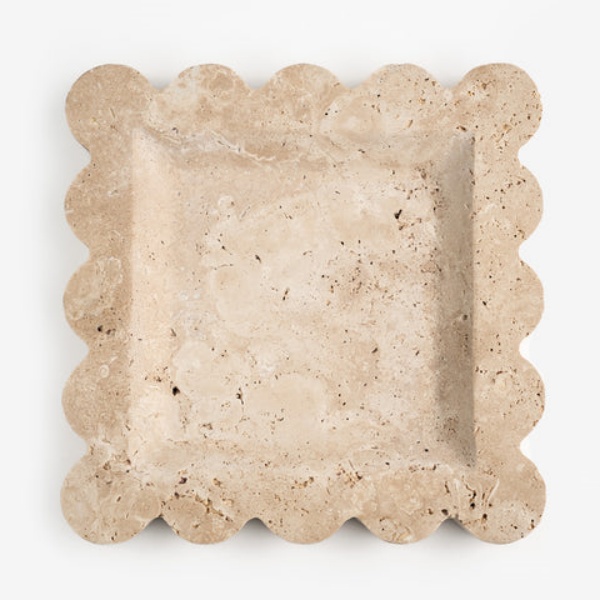
About this scalloped travertine tray
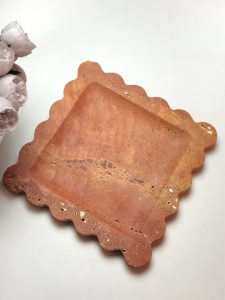
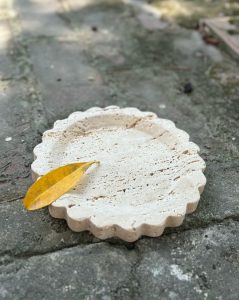
The scalloped travertine tray is a lovely blend of the raw elegance of natural stone and deft design work. Inspired by the undulating patterns in nature, such as waves and rolling hills, the scalloped edges give the normally strong material a gentle, delicate touch. For millennia, architects and designers have appreciated travertine, a type of limestone formed by mineral springs—especially hot springs. This stone tray honours the distinctive textures and patterns of travertine, both as a work of art and a useful object.
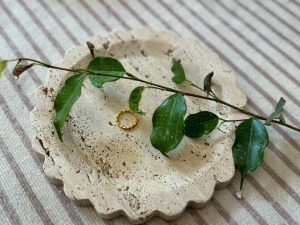
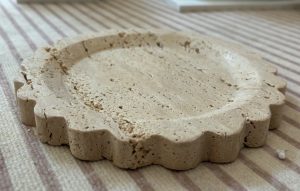
With its elegantly curled edges, the scalloped tray captures classic luxury while being flexible enough to accentuate contemporary design. Each travertine catchall has a different character from the stone’s natural pitting and veining, which guarantees no two pieces are exact. This uniqueness makes the tray not only a useful tool for exhibition and organisation but also a statement piece that accentuates any area’s décor.
 |
 |
1.Common shapes and sizes
The several forms of the scalloped travertine tray provide both aesthetic and practical advantages. Round, square, and rectangle forms are the three most often occurring forms; each has normal dimensions fit for various uses:
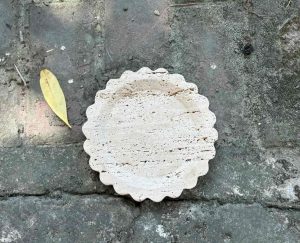
Round Scalloped Stone Tray: A harmonic and balanced look is best created with a round form. Common measurements in diameter are 12 and 16 inches. These measurements are ideal for presenting candles, floral arrangements, or other decorative objects as the focal point on side tables, coffee tables, or dining tables.
The form of a square scalloped travertine tray offers a contemporary, symmetrical design that fits rather nicely in many environments. Usually, sizes are 10 x 10 inches and 14 x 14 inches. Living rooms or bedrooms sometimes feature square trays to arrange personal belongings such as keys, jewellery, or perfume bottles. For carrying spices, oils, soaps, or towels, they also fit nicely in kitchens and bathrooms.
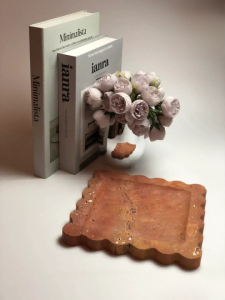
Rectangular Scalloped Travertine Tray: Longer objects or a layered appearance with several objects would find this more elongated surface of the rectangular form perfect. Common widths are 12 x 6 inches and 18 x 10 inches. Serving appetisers, drinks, or desserts, rectangular trays are ideal; they also create a beautiful showcase for ornamental items on consoles or coffee tables.
 |
 |
Common colours and colour matching
Natural colours abound in travertine; for scalloped trays, beige, cream, and white are the most often used hues. Every colour creates a different atmosphere; hence, the colour you use will greatly affect the whole appearance of the room:
Beige marble tray: Warm, earthy tones found in beige travertine foster a comfortable and inviting environment. It goes nicely with warm metals like brass or gold, wooden furniture, and rich colours, including browns, oranges, and deep reds. Versatile and fit for both traditional and modern environments are beige trays.
Cream scalloped travertine trays: Travertine in cream colour presents a softer, lighter appearance that accentuates areas. In spaces featuring pastel tones, light wood, or soft materials like linen, this colour looks great. Perfect for bedrooms, bathrooms, or any area where relaxation is vital, cream trays are great for establishing calm and peaceful surroundings.
White scalloped travertine trays: Though less often seen, white travertine presents a simple, understated look. It fits contemporary homes, particularly those with monochromatic or black-and-white colour schemes. White trays fit offices, dining rooms, or high-end living quarters since they add a little of grace and sophistication.
When choosing a colour, take the intended atmosphere and the current colour palette of the room into mind. White lends a modern, opulent air; beige delivers warmth; cream adds lightness.
 |
 |
 |
Methods of Processing
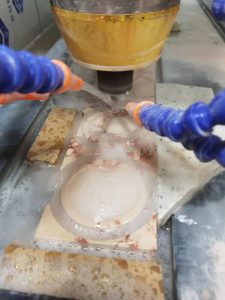
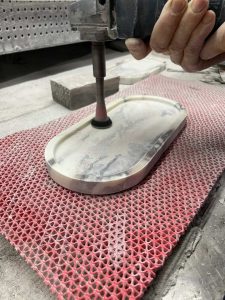
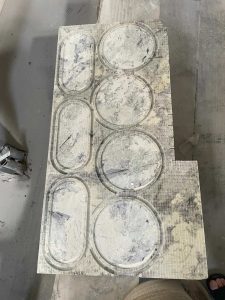
Making a scalloped travertine tray calls for several painstaking procedures to guarantee the end result is both exquisite and strong. The methods of processing comprise:
Cutting: Using exact machinery, the travertine slab is fashioned as desired. The edges of scalloped trays are then sculpted to produce the distinctive scalloped pattern, which calls for expert workmanship to guarantee smooth, equal curves.
Once the tray is formed, its surface is polished to produce a shiny, smooth finish. This method accentuates the natural veining and colour of the stone, therefore creating an arresting tray.
Travertine is a porous material; hence, a protective covering seals the tray to stop stains and water absorption. Maintaining the looks and lifetime of the tray depends on this sealing mechanism, particularly in bathrooms or kitchens.
The last stage is hand-finishing the tray to guarantee flawless scalloped design and clean edges. The opulence of the scalloped travertine tray stems from this meticulous attention to detail.
 |
 |
Application Scenarios and Uses
The scalloped travertine tray’s adaptability qualifies it for a great spectrum of applications and situations. Its exquisite design and natural beauty let it be both ornamental and useful:
Living room Tray: Entryway Catchall can Holding candles, books, or a vase of fresh flowers, the tray can be a lovely centrepiece on a coffee table. On a side table, it can also be used to arrange personal things, coasters, or remote controls.
Bedroom Travertine Tray: The Jewelry plate can be kept in the bedroom on a dresser or nightstand to house little souvenirs, jewellery, or perfume containers. Its sophisticated architecture gives the area a hint of luxury and elevates commonplace objects to become unique.
Bathroom Tray: Where it can arrange towels, candles, or toiletries, the bathroom decor tray is also perfect. The natural stone form of the travertine accentuates the spa-like ambiance of a bathroom, therefore fostering peaceful surroundings.
Office Travertine Tray: In an office setting, the tray can be used to organise stationery, business cards, or even serve as a stylish base for a desk plant or sculpture. Its refined appearance adds a professional touch to any workspace.
FAQs
1. What is a scalloped travertine tray?
A scalloped travertine tray is a natural-stone tray made from travertine (a limestone formed by mineral springs), finished with scalloped edges that add a soft, wave-like design to the stone.
2. Why is each scalloped travertine tray unique?
Travertine has natural pitting and veining, so every tray has different textures and patterns—no two pieces are exactly the same.
3. What common shapes and sizes are available?
Common shapes include round (often 12 or 16 inches diameter), square (often 10×10 or 14×14 inches), and rectangular (often 12×6 or 18×10 inches), each suited to different display or organising needs.
4. What colours are most common, and how should I match them?
Most scalloped trays come in beige, cream, or white. Beige adds warmth and pairs well with wood and warm metals; cream brightens and suits soft fabrics and pastel tones; white fits modern monochrome spaces and adds a clean, refined look.
5. How is a scalloped travertine tray made?
Typical processing includes cutting the slab to shape, sculpting the scalloped edges, polishing to highlight colour and veining, sealing to protect porous stone from stains and moisture, and hand-finishing for clean, even curves.
6. Where can I use a scalloped travertine tray at home?
It works well as a living room centrepiece, an entryway catchall, a bedroom organiser for jewellery and perfume, a bathroom vanity tray for toiletries and towels, or an office organiser for stationery and desk décor.
7. Does a travertine tray need sealing and special care?
Yes. Because travertine is porous, sealing helps prevent stains and water absorption—especially for kitchens and bathrooms—while gentle cleaning helps preserve the finish.
8. Is a scalloped travertine tray more classic or modern in style?
Both. The scalloped edge feels classic and luxurious, while the clean stone surface and simple geometry fit contemporary interiors, making it flexible across design styles.

 Address: Floor 12, No. 10, Guanyinshan Operation Center, Siming District, Xiamen, Fujian, China
 Email:
  Phone:
  jack@hrststone.com