
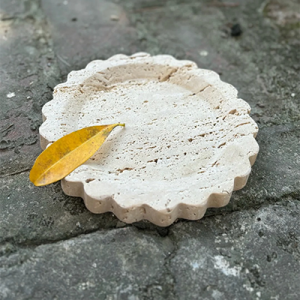
Scalloped travertine stone tray
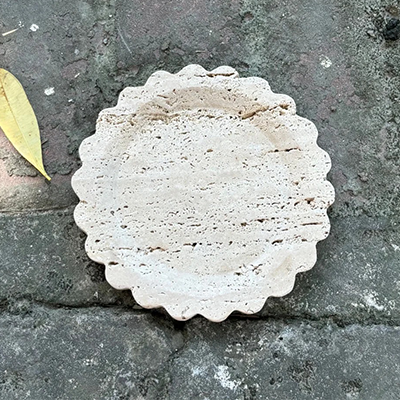
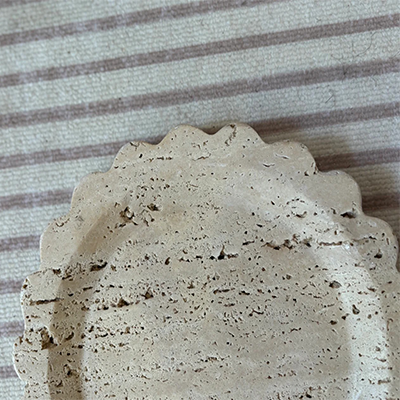
Travertine stone tray unique characteristics include its pitting and porous surface, which creates a complex, nearly organic pattern of small veins and natural cracks. The scalloped edges of the stone tray highlight the natural patterns, creating a gentle, welcoming look. Travertine’s warm, earthy feel, from its neutral palette of creams, beiges, and light browns, complements many design styles, making it an ideal choice for living rooms, bathrooms, kitchens, and dining rooms.
Product Description
Travertine’s source
One type of limestone formed by mineral springs—especially hot springs—is travertine. Italy, especially the quarries in Tivoli, an area that has provided stone for Roman buildings like the Colosseum, boasts the most famous travertine sites. Long and rich, its history is connected to Renaissance artwork and antique buildings. Turkey, Iran, and Peru are other important travertine supplies; the stone has been employed in both modern and traditional designs there.
This legacy helps the travertine stone tray to bring a bit of this timeless material into your home. The scalloped travertine stone tray provides a physical link to nature and history, whether it is used for decoration only, organization, or serving.
Textures and Patterns
Scalloped round travertine stone tray texture is among its most arresting qualities. Travertine’s distinctive beauty comes from its inherent pitting and porous surface; little variances make every piece different. The development of this stone produces a complex, nearly organic pattern of small veins and natural cracks that accentuates its appeal. The travertine stone tray highlights the natural patterns of the stone by means of the scalloped edges, therefore producing a gentle, welcoming look.
Travertine’s warm, earthy feel from its neutral palette of creams, beiges, and light browns fits naturally with many design styles. From simple to rustic and even Mediterranean-inspired designs, the travertine stone tray takes advantage of these tones to be a flexible accompaniment for many décor ideas.
Color Complementary Pairing and Spectrum
Earthy Neutrals: Travertine stone tray light beige, cream, and tan colors fit earthy tones like browns, taupes, and warm grays rather easily. For a calming, natural look, set it against a beige or sand-colored backdrop. Perfect for rustic, simple, or Mediterranean-inspired homes, this color scheme conjures a natural, grounded vibe.
White and Light Colors: Modern travertine stone tray warm undertones complement clean white walls and light furniture really brilliantly. This mix preserves a fresh, breezy environment while highlighting the texture of the tray. Perfect for modern or Scandinavian homes, this color maintains the space feeling calm and open.
Pastels and Soft Hues: Travertine tray gentle, warm tones complement pastel colors, including soft pinks, light blues, or subdued greens, really nicely. Perfect for bedrooms, bathrooms, or living spaces where you wish a soft, inviting ambiance, this mix can produce a relaxing, peaceful environment.
Appropriate Locations and Uses
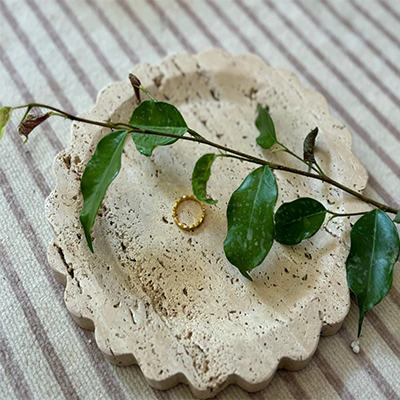
Living Room: To arrange décor including candles, books, or little plants on a coffee table or console, a travertine stone tray works great. Its neutral tones and natural texture will accentuate a little of refinement while complementing many interior designs, from modern to rustic.
Bathroom:In a bathroom, a small bathroom travertine stone tray works well for storing towels, fragrances, or amenities. Its water-resistant qualities make it a sensible choice, and it gives the area a spa-like luxury. Arranging it on a vanity or countertop improves the whole look and helps to keep objects neat.
Kitchen: A stylish base for arranging kitchen basics, including spices, oils, or cutting tools, a travertine tray can provide. It can also serve as a sleek, natural presentation tray for food or beverages. The neutral stone complements modern and classic kitchen layouts rather nicely.
Dining Room: A travertine scalloped tray can be placed as a centerpiece in a dining room to contain candles, vases, or other objects. At events, it can also be a sophisticated stage for showcasing sweets, fruits, or appetizers. The warmth of the stone gives the dining table an organic character, therefore improving the dining experience.
Why Would One Want a Travertine Stone Tray?
Natural Elegance: Every travertine stone tray is unique since travertine is a timeless natural stone with distinct veining and texture. Its earthy tones and organic beauty accentuate any space’s visual attractiveness and provide a hint of richness and elegance without being unduly ostensive.
Versatility: From modern to rustic, minimalist to Mediterranean, travertine trays blend rather naturally into many home design trends. Their neutral tones let them accentuate any kind of color scheme and décor, thereby enabling them to fit any kind of residence.
Customizable: Travertine stone trays enable you to customize to fit your particular demands or tastes by varying forms, sizes, and finishes. Travertine can be matched to your design aesthetic, whether your preferred finish is polished, smooth or more rustic, rough.
Repair and Maintenance
Travertine is permeable, so it’s crucial to seal the stone to stop stains. Applied every six months, a premium stone sealer will guard the surface from spills and moisture. Using a soft cloth and a light detergent, clean the travertine mable stone tray. Steer clear of acidic cleaners since they might harm the surface of the stone; examples include vinegar or lemon juice.
PH-balanced cleaner meant especially for stone.Travertine is strong, yet if handled improperly, it can chip. To prevent damage, always elevate the tray rather than dragging it across surfaces. Steer clear of extreme temperatures: Hot pans and cold things should not be set straight on the stone without a covering to avoid thermal shock, which can split the tray.a
FAQ
1. What makes a scalloped travertine stone tray unique?
A scalloped travertine stone tray is unique because of its naturally porous texture, organic veining, and hand-finished scalloped edges. Each tray has natural pits and variations formed by mineral deposits, making every piece one of a kind.
2. Is travertine stone suitable for daily use trays?
Yes. Travertine is a durable natural limestone commonly used in architecture and interiors. When properly sealed, a travertine stone tray is suitable for everyday decorative and organizational use in living rooms, kitchens, bathrooms, and dining areas.
3. Can a travertine stone tray be used in bathrooms or kitchens?
Absolutely. Travertine trays are frequently used in bathrooms for toiletries and in kitchens for oils, spices, or utensils. Sealing the tray helps protect it from moisture and staining, making it practical for these environments.
4. Will every travertine stone tray look the same?
No. Travertine is a natural stone, so color tone, veining, pitting, and texture vary from piece to piece. This natural variation is part of its appeal and ensures that no two trays are exactly alike.
5. Does a travertine tray require special maintenance?
Maintenance is simple. Clean the tray with a soft cloth and a pH-neutral stone cleaner. Avoid acidic products such as vinegar or lemon juice. Resealing every 6–12 months is recommended to maintain protection and appearance.
6. Are scalloped edges purely decorative or functional?
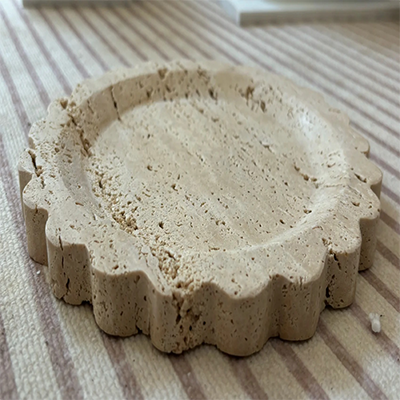
Scalloped edges are both decorative and functional. They soften the overall appearance of the tray, highlight the stone’s natural patterns, and provide a subtle grip when lifting or moving the tray.
7. Can the travertine stone tray be customized in size or finish?
Yes. Travertine stone trays can be customized in shape, size, thickness, and surface finish, such as honed, polished, or natural matte, depending on design preferences and intended use.
8. Is travertine heat-resistant for serving use?
Travertine has natural heat resistance, but it is recommended to use coasters or mats when placing very hot or extremely cold items on the tray to avoid thermal shock and surface damage.

 Address: Floor 12, No. 10, Guanyinshan Operation Center, Siming District, Xiamen, Fujian, China
 Email:
  Phone:
  jack@hrststone.com