
7 Best Stacked Stone Fireplace Ideas
Stacked stone fireplaces are a popular choice for adding warmth, texture, and a classic look to your home. These fireplaces consist of rectangular stones layered on top of one another, creating a layered texture that gives the stones the appearance of growing gradually over time. They have been used since ancient times for their fire resistance and can be tailored to fit any style.
7 ideas for stacked stone fireplaces include making the entire wall the main attraction, creating a roomy hearth for comfortable seating, and using the same stacked stone in different parts of the area for a cohesive effect. HRST’s stacked stone fireplace offers a rustic yet sophisticated touch, improving the room’s comfort and atmosphere.
Product Description
One of the most eye-catching ways to add natural stone to your house is with a stacked stone fireplace, which adds warmth, texture, and a classic look. Stacked stone is still a popular option for building gorgeous fireplace elements in both modern and classic settings because of its rough yet elegant appearance. This post will discuss the opulent appeal of stacked stone fireplaces, offering innovative designs and ways to use this adaptable material to improve your living area.
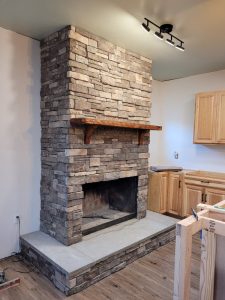
What is a Stacked Stone Fireplace?
Rectangular stones are layered on top of one another with little to no grout between them in a stacked stone fireplace style. The layered texture produced by this construction technique gives the stones the appearance of having grown gradually over time. Depending on the desired look, the stones can be monochromatic or feature a blend of colours, and they are frequently arranged in a uniform or random pattern.
Since ancient times, Stacked Stone has been used to build fireplaces because of its many benefits, including its resistance to fire. Nevertheless, thin veneer panels are frequently used in the construction of stacked stone fireplaces nowadays. The process is speedier and less expensive with these panels because they are significantly lighter and simpler to install than whole stones.
A focal point in a living room or other gathering place can be created with piled stone, which adds a feeling of grandeur and elegance to any fireplace due to its natural texture and beauty. Stacked stone can be tailored to fit any style, whether you choose a more contemporary, clean finish or a more rustic, traditional look.
7 Ideas for Stacked Stone Fireplaces
Stacked Stone Fireplace Make the entire wall the main attraction
Some homeowners choose to continue the stacked stone all the way up the wall, making the entire fireplace area a commanding focal point, even though the majority of fireplaces are solitary attractions. When combined with additional design components like a modern or historic mantel, contemporary furniture, or ambient lighting, this method produces a dramatic effect and highlights the fireplace. This kind of fireplace wall may be easily erected and gives the room height and visual interest by employing stacked stone panels that fit together perfectly.
Make a Roomy Hearth for Comfortable Seating
Think about creating a wide hearth for a genuinely welcoming Stacked Stone Fireplace. The ideal area for additional seats is a large hearth, which creates a comfortable area for people to congregate and take in the fire’s warmth. A unified pattern is produced by the natural stone of the hearth and the stacked stone around the fireplace. Wide hearths also have functional advantages, such as serving as a surface for the placement of objects like candles or fuel. With its extra-wide hearth, HRST’s Thin Veneer stacked stone fireplace gives a rustic yet sophisticated touch that improves the room’s comfort and atmosphere.
Select a Single for Stacked Stone Fireplace
Use the same stacked stone in different parts of your area for a very cohesive effect. For example, you may use HRST’s selection of stones, which come in shades like grey, white, tan, pink, and black, for your feature wall or outdoor patio as well as your fireplace. This ties the design components of the entire room or house together and produces a cohesive aesthetic by enabling the stacked stone to move smoothly between various areas. In open-concept homes, where material consistency promotes visual coherence, this strategy works particularly well.
Create a Subtle Accent
It’s not necessary for stacked stone to be ostentatious and intimidating. In certain areas, stacked stone can be used to add a delicate accent that improves the overall layout without drawing too much attention to itself. For instance, a fireplace with Alaska Grey stacked stone panels can provide texture and dimension without taking centre stage in a space that is mostly white or neutral in colour. The stone’s combination of grey, white, and blue hues will create a soft contrast that gives the room depth and cosiness. The stacked stone fireplace may still have an effect while blending in well with other architectural components thanks to this subtle method.
Use Timeless Materials to Create Modern Luxury
A stacked stone fireplace can be used to create a sleek, contemporary luxury design; it doesn’t have to be a rustic element. A contemporary fireplace and stacked stone can be combined to create the ideal blend of innovation and nature. For instance, think of combining your piled stone surround with built-in storage or a flat-screen TV. Strategic lighting can be employed to draw attention to the stone’s texture and colour variations, further elevating the area. This contemporary interpretation of piled stone preserves the material’s inherent beauty while adding refinement to your living area.
Remove the mantle for a streamlined Appearance
Although mantels are a common part of classic fireplaces, many modern designs choose to do away with them in favour of a more minimalist appearance. The stacked stone takes front stage in the absence of the mantle, revealing all of its natural textures. In contemporary homes that prioritise open areas and clean lines, this style of design can work very well. Additionally, the lack of a mantle gives the space a sleeker, more modern appearance. Without the need for extra architectural components, you can still create depth and dimension in the fireplace area with stacked stone panels.
Use a Mix of Natural Materials for Your Stacked Stone Fireplace
One of the best ways to provide contrast and cosiness to a room is to combine piled stone with other organic elements like metal or wood. A stone fireplace encircled by hardwood floors or accentuated with metal trim, for instance, might produce a well-balanced and hospitable design. The Diamond Peak stacked stone veneer, which features grey tones with sporadic rusty brown highlights, is one illustration of this. Warm wood tones ground the design, while the stone’s linear pattern leads the eye upward and creates vertical interest. This blend of metal, wood, and stone produces an opulent, cosy space that is both fashionable and practical.
Why Choose Stacked Stone for Your Fireplace?
Stacked stone is incredibly durable in addition to being aesthetically pleasing. Its natural texture guarantees that it will endure over time, and its fire-resistant qualities make it the perfect material to use around fireplaces. The stone’s capacity to hold heat enhances the fireplace’s effectiveness and makes it a sustainable choice.
The classic charm of stacked stone complements almost any design aesthetic. You can customise piled stone to fit your style preferences, whether you like a traditional, rustic, or modern appearance. With the variety of colours, textures, and patterns available, you may design a fireplace that flawlessly blends in with the overall design of your house.
You may utilise stacked stone in a number of ways, from a subtle accent to a dramatic statement. It can be combined with other materials, like glass, metal, or wood, to provide countless design options. With piled stone, you may construct a full-wall fireplace or a more understated element that suits your style.
Any property would benefit from the classic and opulent addition of a stacked stone fireplace. Stacked stone offers countless design options, whether you want to use it as a striking focal point, blend it in perfectly with your decor, or create a cosy and welcoming hearth. Because of its inherent beauty, toughness, and adaptability, it’s a great option for both traditional and modern homes, and it will undoubtedly improve the atmosphere of your living room for many years to come.
FAQ
1. What is a stacked stone fireplace?
A stacked stone fireplace is a fireplace surround or feature wall made from thin, rectangular stones arranged in layered rows with minimal visible grout. This technique creates a textured, dimensional surface that looks naturally built over time, giving the fireplace a warm, architectural focal point.
2. Is stacked stone safe to use around a fireplace?
Yes. Natural stone is naturally heat tolerant and has been used around fireplaces for centuries. The key is proper installation using the correct heat-rated materials and clearances for your specific firebox type, so the stone performs safely and looks consistent over time.
3. What’s the difference between full stone and thin veneer stacked stone?
Full stone is thicker and heavier, often requiring more structural support and longer installation time. Thin veneer stacked stone uses lighter panels or slices that are easier to handle and install, while still delivering a similar textured look—making it a popular modern solution for feature walls and fireplace surrounds.
4. Can stacked stone work in modern interiors or is it only rustic?
It works beautifully in modern spaces. When paired with clean lines, a streamlined firebox, simple furniture, and subtle lighting, stacked stone can look sleek and contemporary. Rustic styles also benefit from it, so it’s one of the most flexible natural stone finishes for fireplace design.
5. Should I run stacked stone from floor to ceiling?
Floor-to-ceiling stacked stone creates a dramatic statement and visually “lifts” the room by adding height and texture. It’s ideal when you want the fireplace to be the main attraction, especially in open-concept layouts. For smaller rooms, a partial surround can still deliver impact without overwhelming the space.
6. Does a stacked stone fireplace need special maintenance?
Maintenance is simple. Dust the surface regularly and clean gently with a soft brush or cloth. Avoid harsh acidic cleaners that can damage stone finishes. If your stone is sealed, it will be easier to keep clean and more resistant to soot or residue in high-use settings.
7. Can I match stacked stone in other areas for a cohesive look?
Yes, and it’s one of the best design moves. Using the same stacked stone on a nearby accent wall, bar face, outdoor patio feature, or entryway detail creates a consistent material language throughout the home. This works especially well in open-plan designs where visual flow matters.
8. What design features make a stacked stone fireplace feel more “luxury”?
Luxury usually comes from proportion and finishing choices: a full-height stone wall, a wide hearth for seating, integrated lighting to highlight texture, and a clean mantel approach (or no mantel at all). Pairing stacked stone with wood, metal, or minimalist built-ins can also elevate the overall look.

 Address: Floor 12, No. 10, Guanyinshan Operation Center, Siming District, Xiamen, Fujian, China
 Email:
  Phone:
  jack@hrststone.com