
What are Natural Stone Vessel Sinks?
A premium choice for modern bathroom decor, natural stone vessel sinks provide an amazing mix of raw elegance, durability, and timeless appeal. Each of these bathroom sinks, carved from single slabs of natural stone, is a functional work of art with distinctive texture, colour variances, and patterning. Particularly admired for their beauty and strength are stones including marble, travertine, and onyx. Natural stone marble vessel sinks accentuate any bathroom environment with their elegant appearance and feel, therefore adding a little of organic beauty.
Designed to sit above the counter or be somewhat recessed, vessel sinks—which function as the focal point in contemporary bathroom designs—differentiate from conventional sinks. With its wide range of colour palettes and patterns, natural stone has countless opportunities for designing a custom washbasin that captures personal taste and aesthetic inclination.
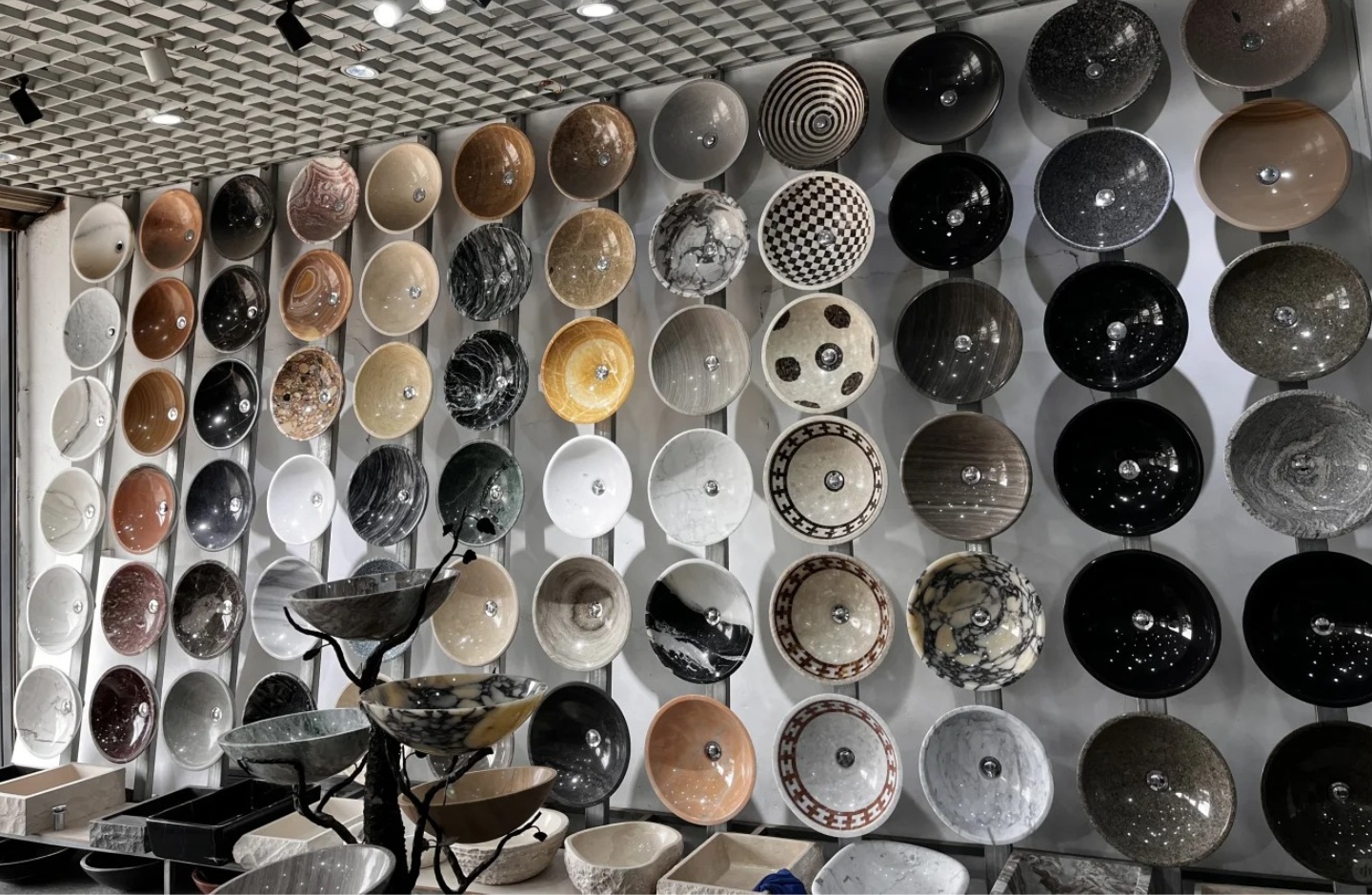
HRST offers a variety of natural stone vessel bathroom sinks, each with its own unique characteristics and charm.
HRST Vessel Bathroom Sinks collection includes:
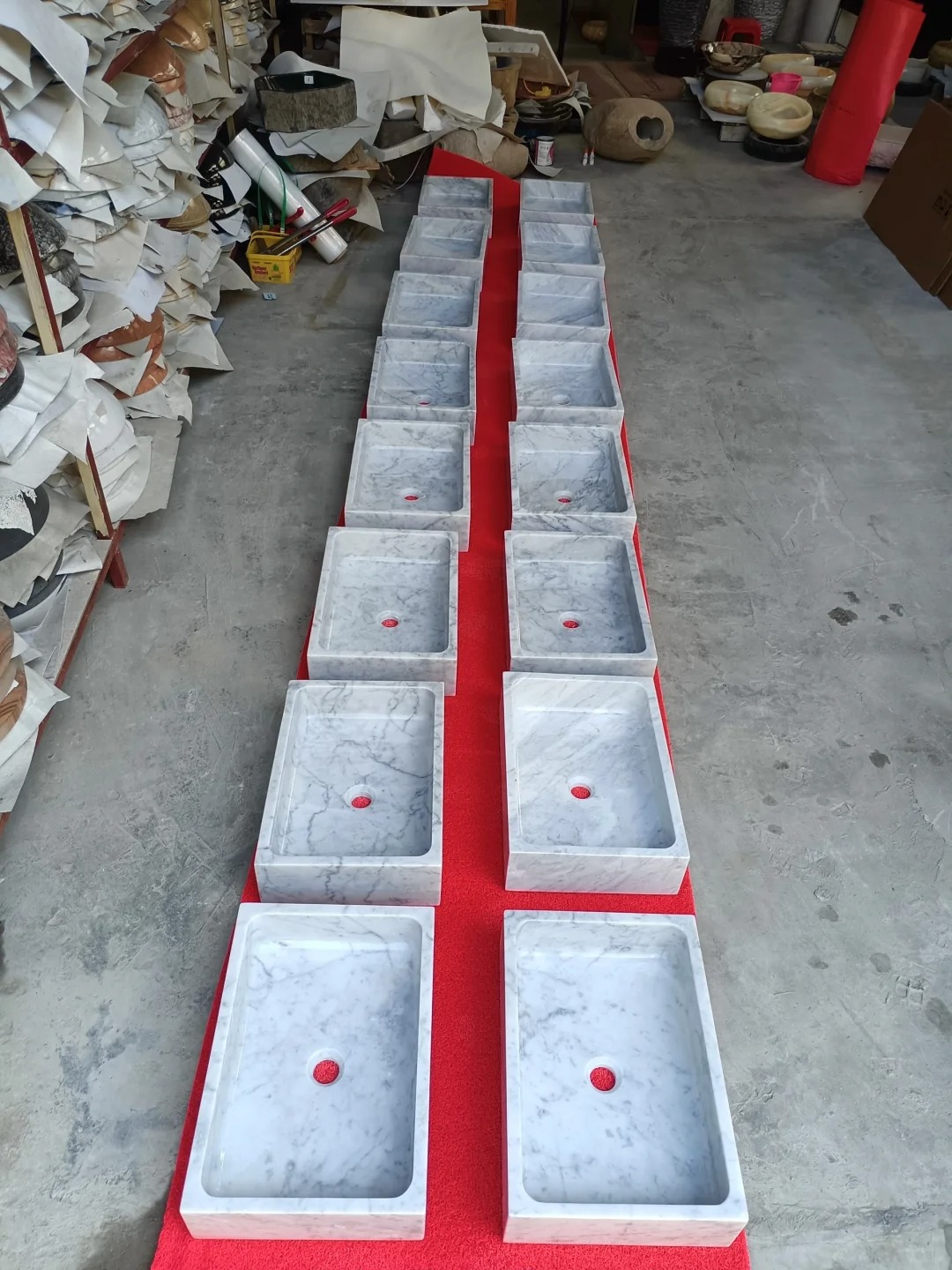
Marble Vessel Sinks
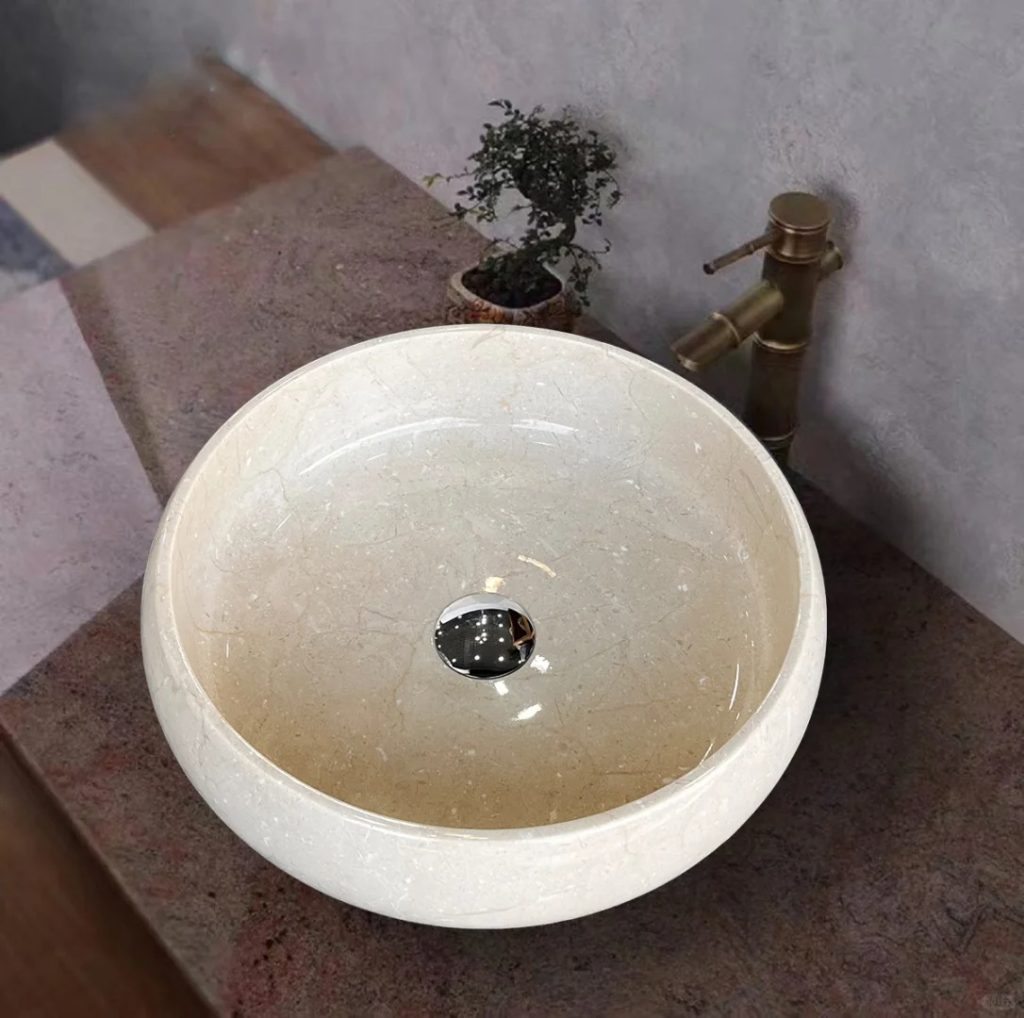
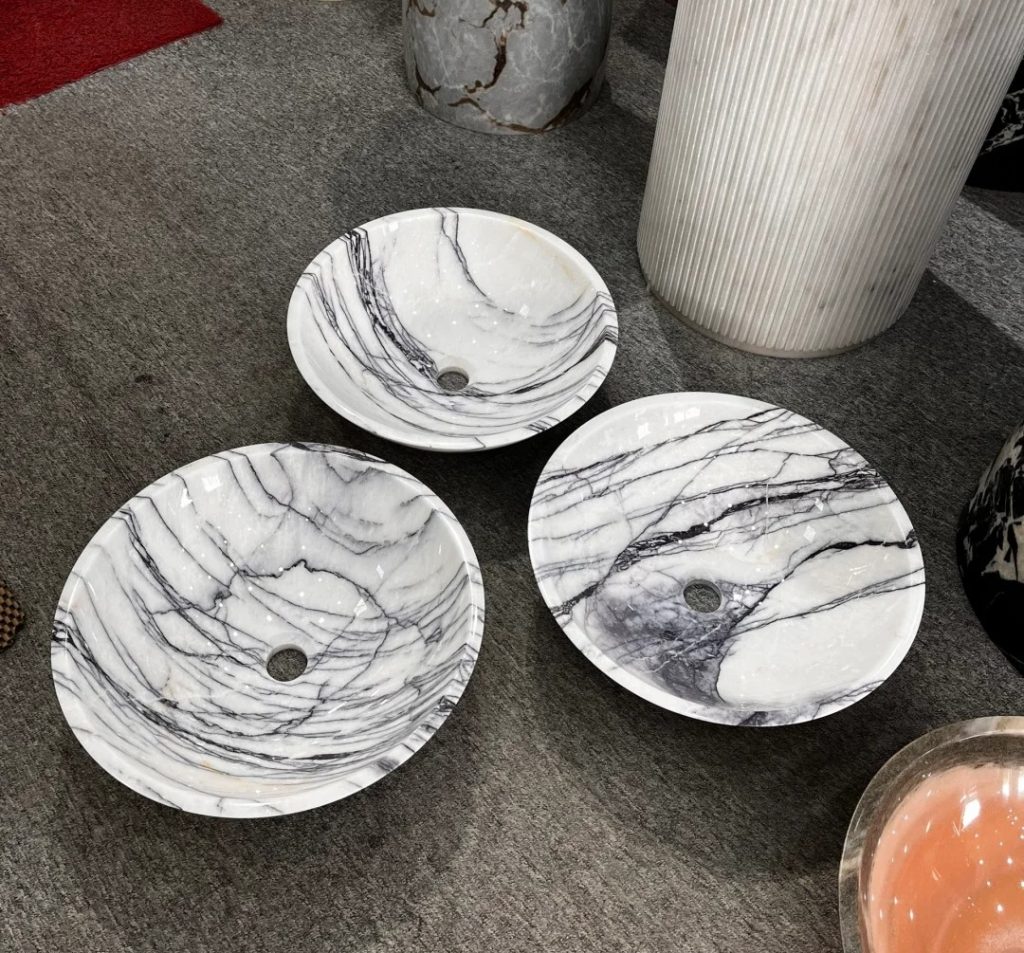
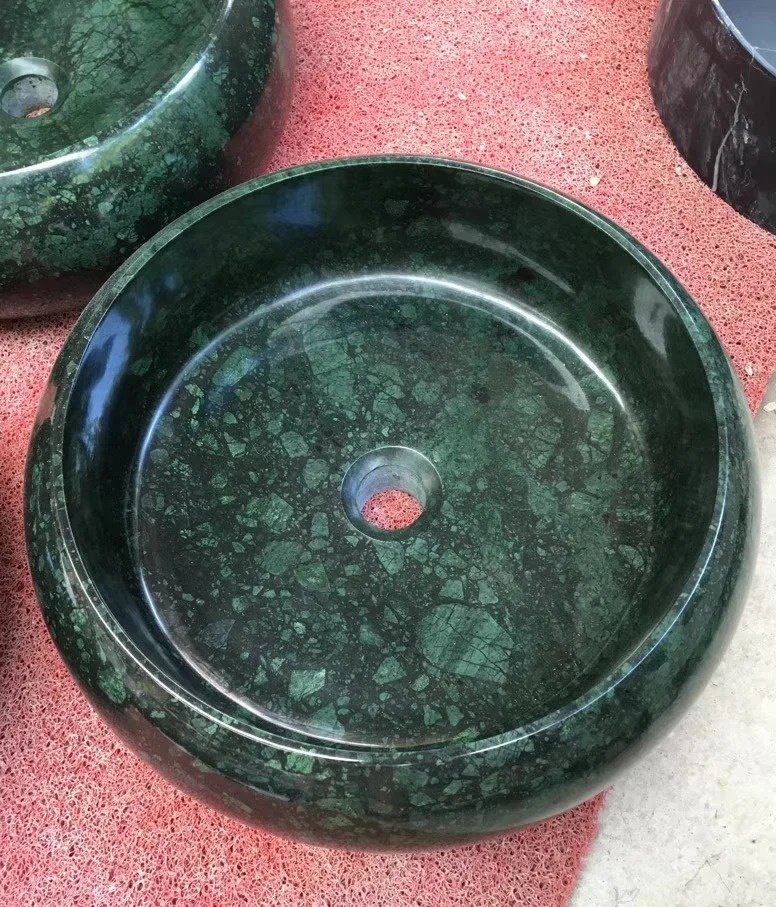
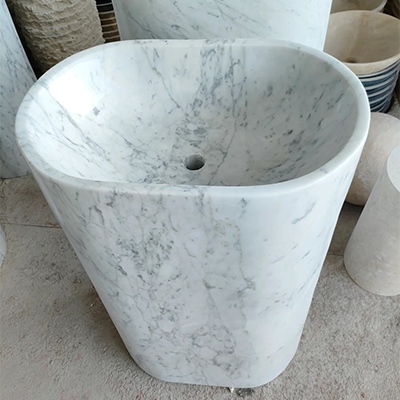
Marble vessel sinks are well-known for their great durability, smooth feel, and opulence. Depending on the type of stone, the graceful, flowing pattern created by the veins of marble can be subdued to dramatic. From respectable quarries, HRST gets marble that offers sinks in white, black, grey, and even pink. Marble sinks’ elegant appearance fits very nicely in high-end bathroom layouts and lends a sophisticated touch.
 |
 |
 |
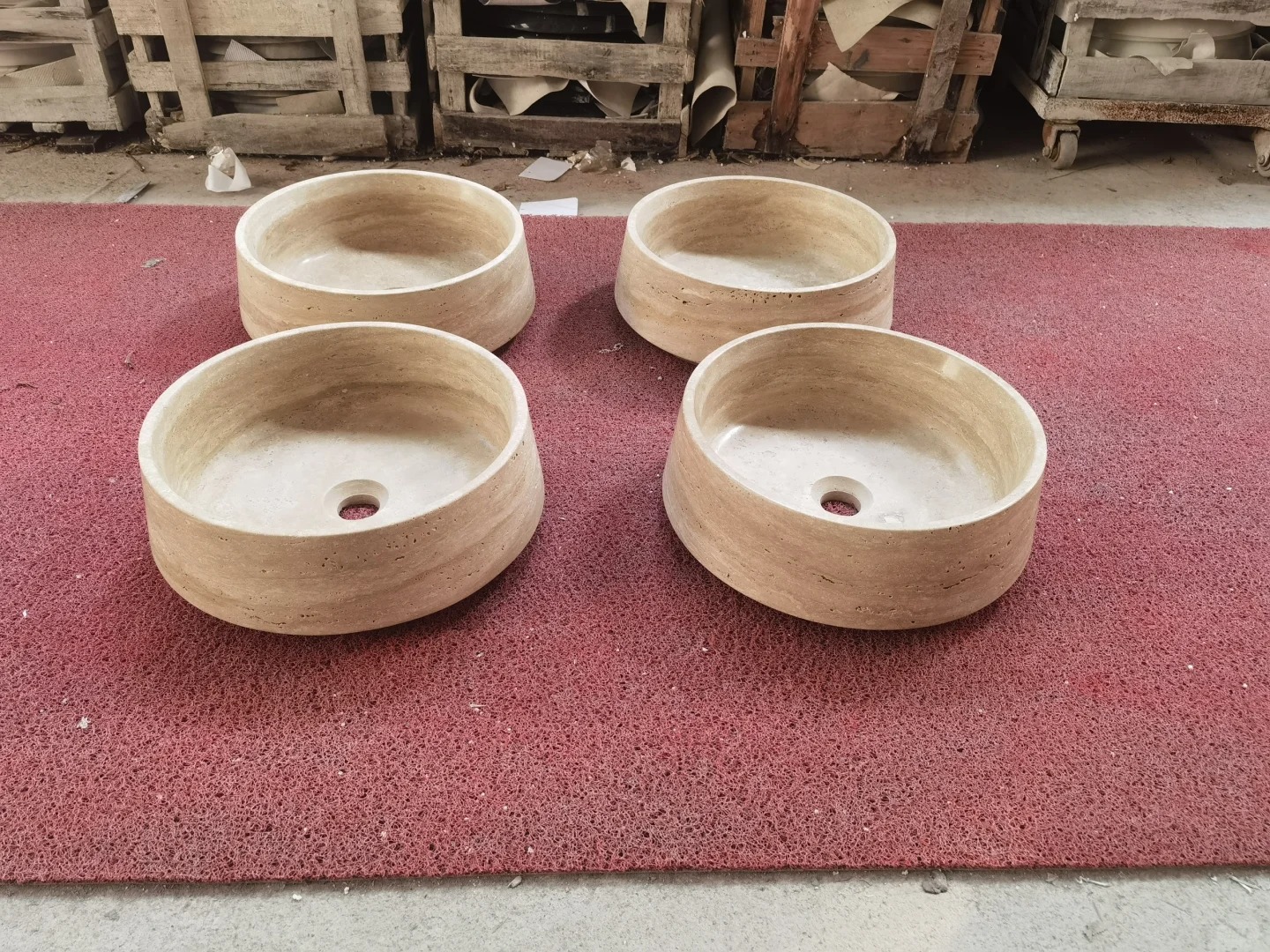
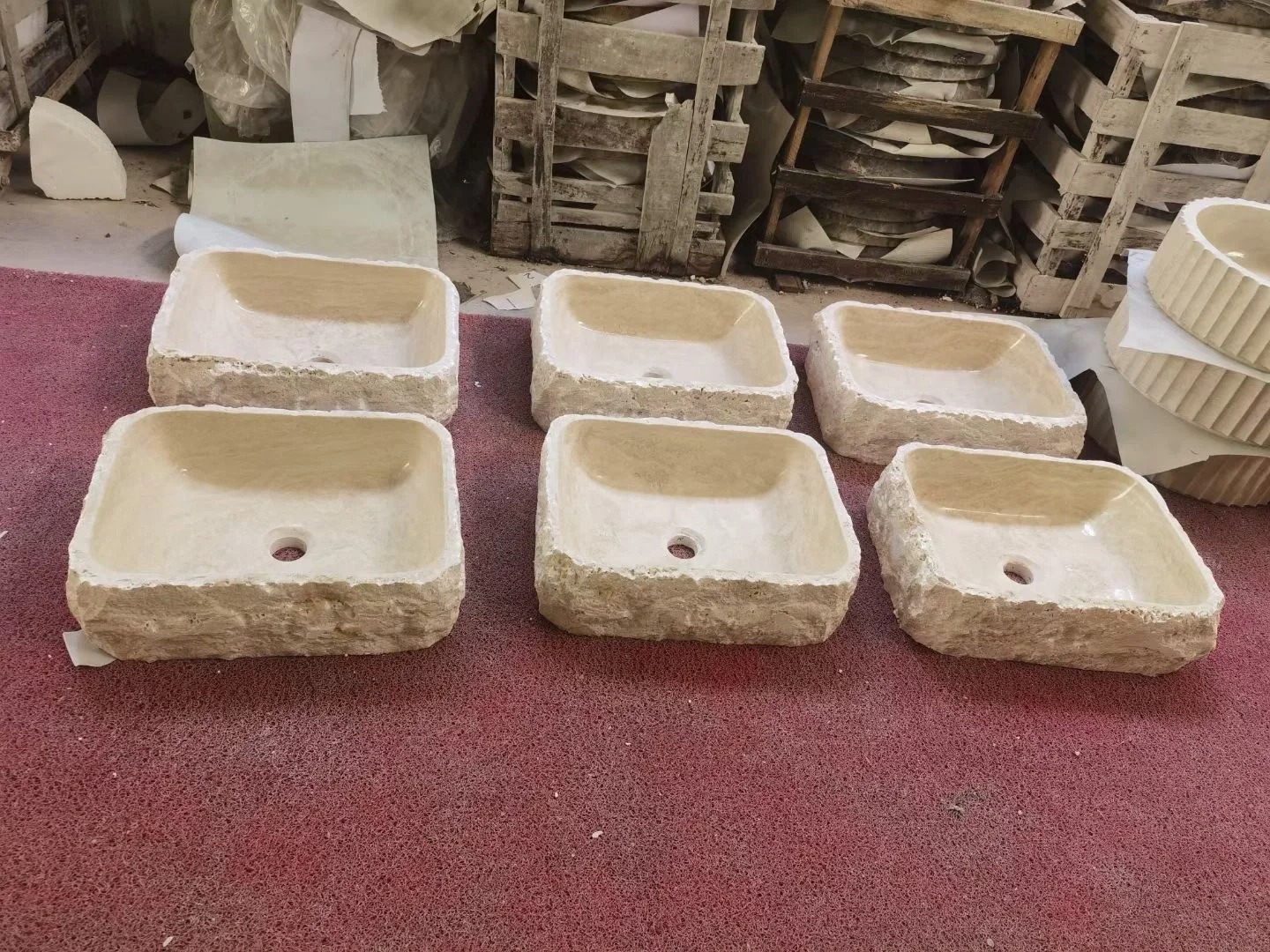
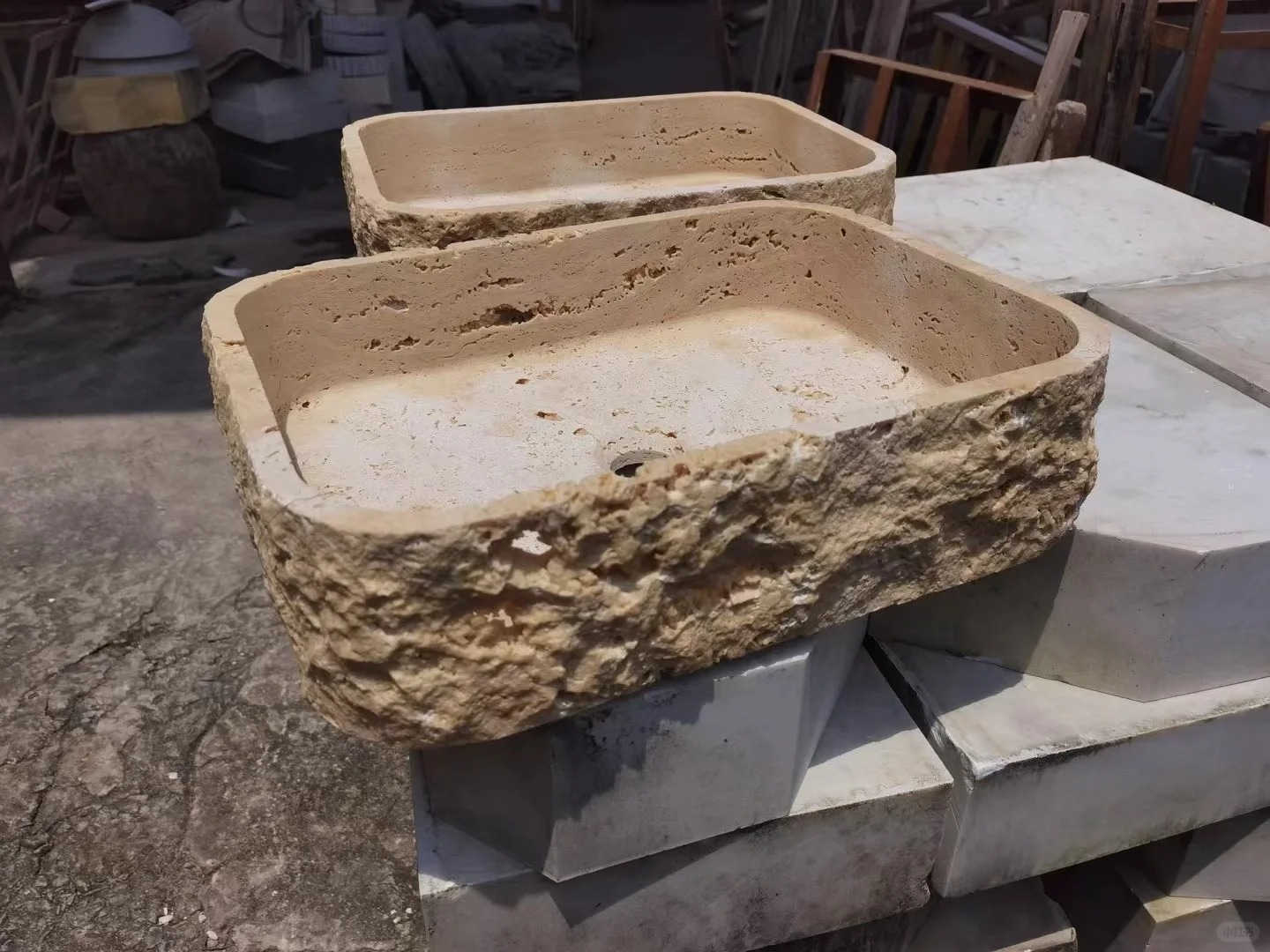
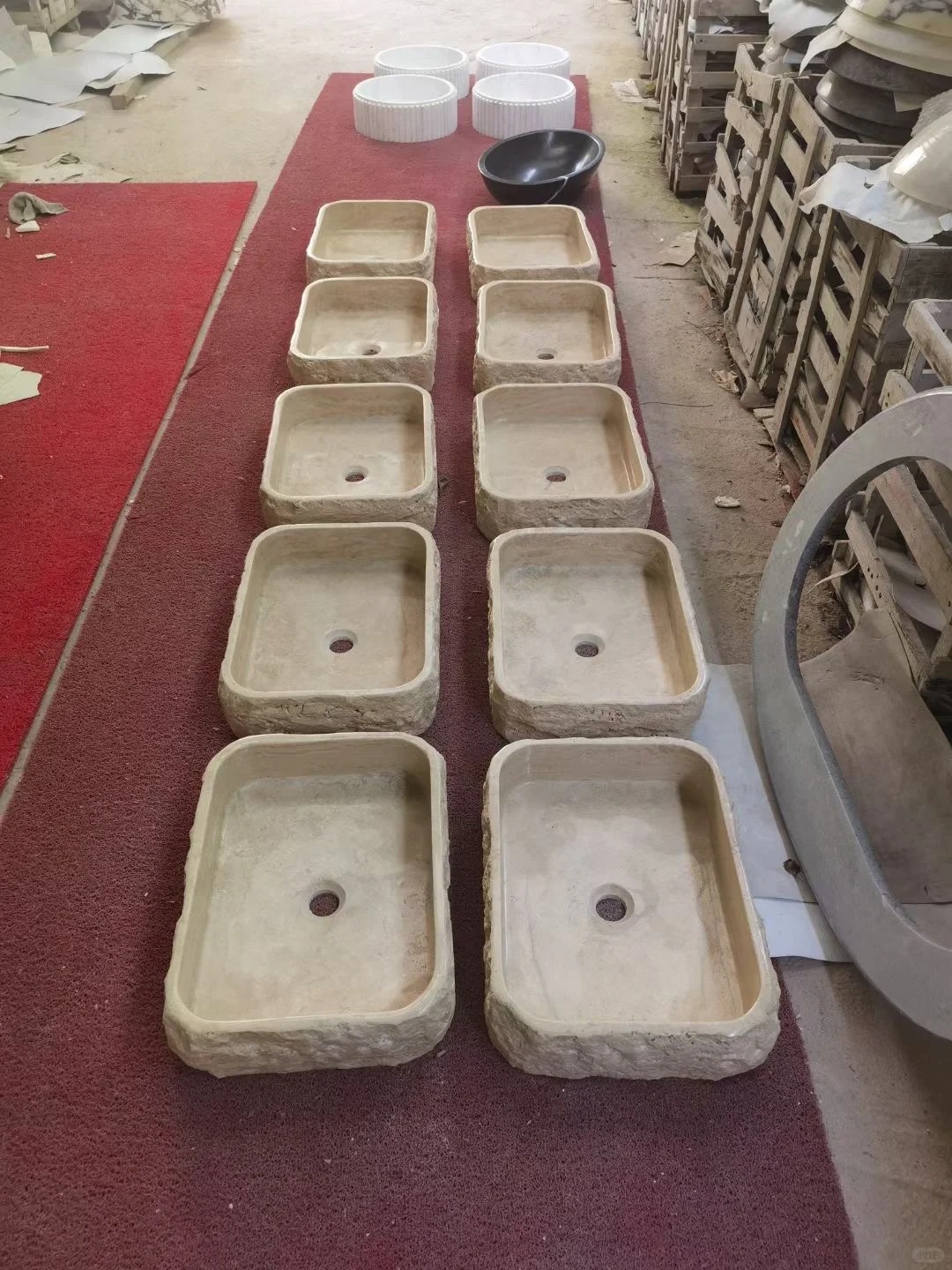
Travertine Vessel Sinks
A more rustic and earthy look comes from travertine vessel sinks. Travertine has a unique texture that reminds one of warmth and comfort from its porous surface and natural pits. Usually beige, cream, and ivory in colour, this stone is perfect for bathrooms with a natural, organic design concept. Treatment and sealing of HRST’s travertine sinks improves resistance to stains and longevity.
 |
 |
 |
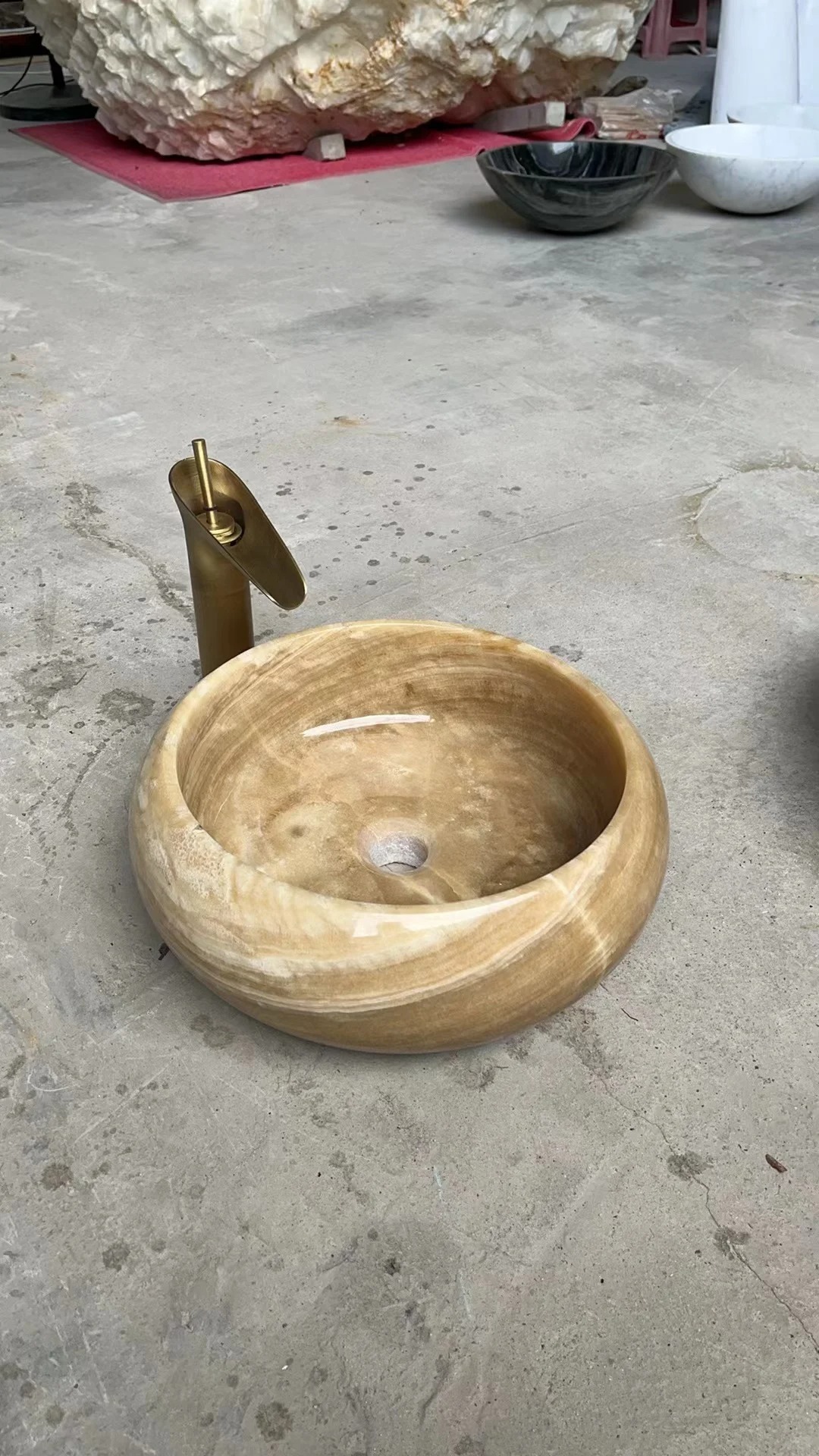
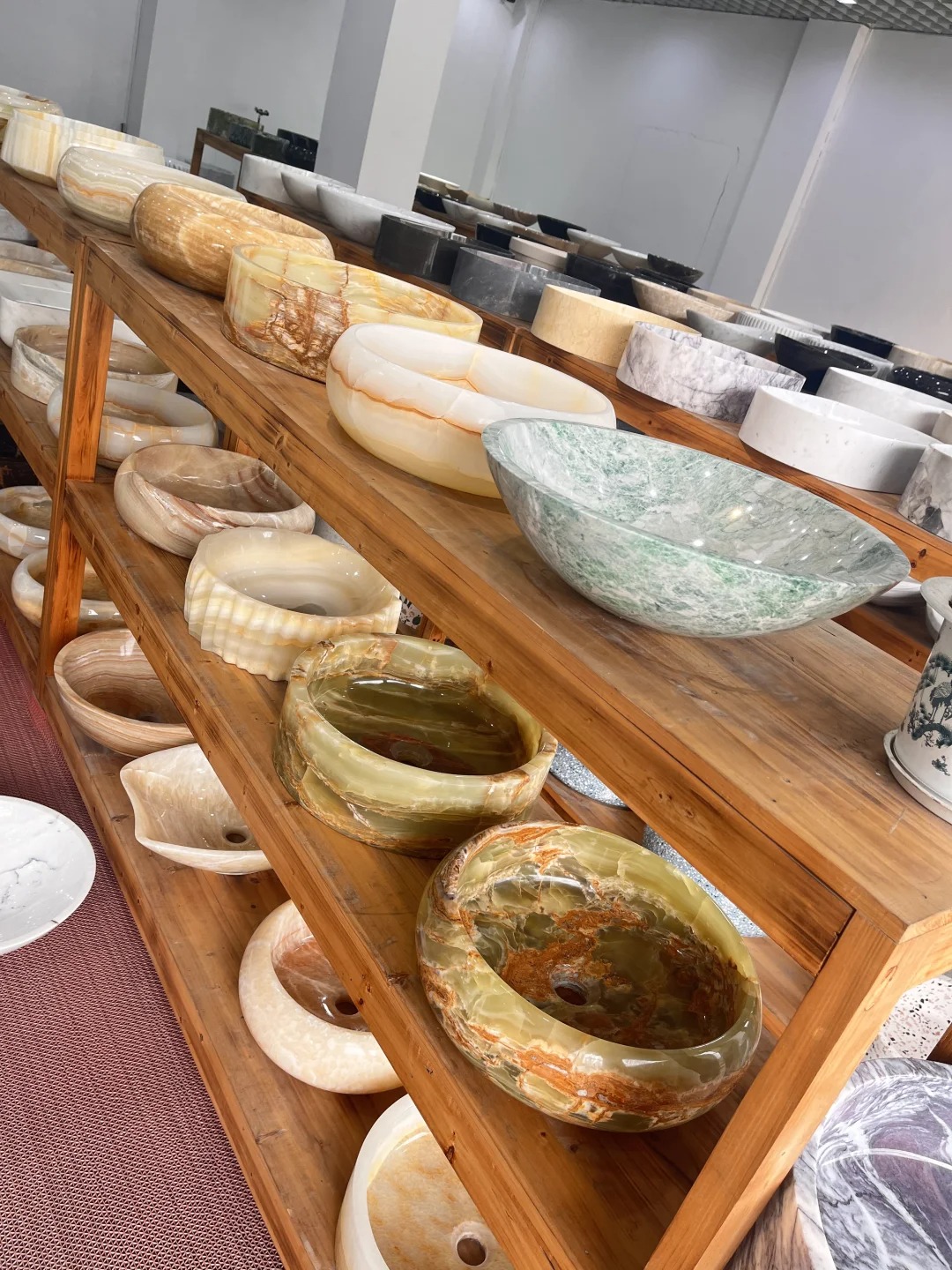
Onyx Vessel Sinks
Onyx vessel sinks are all about glamour. Any bathroom should have onyx as a centrepiece since it is a transparent stone that may be lighted for an otherworldly brightness. Onyx vessel sinks provide a special mix of beauty and utility and are available in amazing tones of green, pink, white, and blue. Perfect polishing of HRST’s onyx sinks guarantees their uniqueness in contemporary and classic bathroom designs.
 |
 |
Pros and Cons of Natural Stone Vessel Sinks
advantages:
Every stone washbasin is a one-of-a-kind item with natural veining and colour variances that guarantee no two sinks are the same.
Modern stone sink, particularly those composed of materials like marble and travertine, are quite robust and, with proper maintenance, can last decades.
Natural stone is a great investment for long-term bathroom decor since its elegance and beauty never go out of trend.
Stone marble sinks give any bathroom a high-end, opulent touch that evokes a spa-like environment.
Cons:
Maintenance: Natural stone absorbs stains and water, yet, if not sealed correctly, its beauty requires constant preservation by regular sealing and maintenance.
Stone sinks are heavier than synthetic or ceramic materials; hence, extra support during installation could be necessary.
Natural stone vessel sinks might be more costly than other materials because of the labour-intensive carving and polishing procedure as well as the raw stone’s price.
When comparing natural stone vessel sinks with artificial stone and ceramic sinks, several differences stand out:
Natural Stone vs. Artificial Stone Sinks
Natural stone sinks are unique, with variations in colour and veining, while artificial stone sinks tend to have uniform appearances.
Natural stone requires more maintenance, including regular sealing, whereas artificial stone is more resistant to stains and scratches.
The durability and authenticity of natural stone give it a high-end appeal, while artificial stone offers more affordable options.
Natural Stone vs. Ceramic Sinks
Though lighter, ceramic washbasin sinks can chip or break more readily; stone sinks are heavier and more robust.
Unlike natural stone, ceramic sinks are low-maintenance and require not sealing.
From looks, natural stone gives a more opulent, organic appearance, while ceramic has a simple, understated appeal.
How To Install A Stone Vessel Sink
Usually placed on top of bathroom vanities or counters, stone vessel sinks let their natural beauty be completely appreciated. Two main installation techniques exist:
Usually used for vessel sinks, where the sink rests totally above the countertop, this is an above-counter installation. The sink’s form and texture are highlighted in this arrangement, therefore elevating it to a bathroom main point. It offers greater countertop usable space as well.
Under this technique, only a bit of the washbasin is seen above the surface as part of a partially recessed installation into the countertop. This can expose the natural beauty of the stone while still producing a more subdued appearance.
 |
|
Leading vessel sink manufacturer and supplier for China, HRST is natural stone vessel sink maker. Being a source factory, HRST supports bespoke designs and provides wholesale pricing so that consumers may develop distinctive washbasin styles depending on certain tastes or drawings. Having worked in the stone business for years, HRST is well-known for its excellent workmanship, large range of materials, and dedication to provide clients all around customised solutions.
HRST offers a variety of choices to fit every bathroom project, whether your preferred marble vessel sink or a sleek, modern onyx design. Offering customised services for both domestic and hotel business environments, they are experts in customisable sinks. HRST keeps leading the way in the natural stone vessel sink market by fusing current technologies with ancient stone workmanship.
FAQs
1. What is a natural stone vessel sink, and why do people choose it for modern bathrooms?
A natural stone vessel sink is carved from a single piece or slab of real stone and designed to sit above the countertop (or partially recessed). People choose it because it looks like functional sculpture: every sink has unique veining, color shifts, and texture that factory-made materials cannot truly copy. In modern bathrooms, the vessel shape becomes a focal point, adding depth and a “spa” feeling without needing excessive decoration. It also pairs well with contemporary vanities, minimalist hardware, and statement faucets.
2. What’s the difference between marble, travertine, and onyx vessel sinks?
Marble vessel sinks feel smooth and refined, with veining that ranges from subtle to dramatic, making them a strong fit for luxury and modern-classic bathrooms. Travertine vessel sinks look warmer and more earthy, often showing natural pits and a porous character that suits organic, rustic, or Mediterranean-inspired spaces—especially when properly treated and sealed. Onyx vessel sinks are the showpiece option: the stone can be translucent, so it’s often chosen for dramatic visual impact and can look especially striking with creative lighting. The “best” choice depends on the mood you want: elegant (marble), natural and cozy (travertine), or glamorous centerpiece (onyx).
3. Are stone vessel sinks durable, and what are the real maintenance requirements?
Yes, natural stone sinks are generally durable and can last for many years when cared for correctly. The main maintenance requirement is sealing, because many natural stones can absorb moisture and stains if left unprotected. Regular gentle cleaning is important, and the sink should be kept dry after heavy use when possible. If you treat the sink like a premium natural surface—clean it softly and maintain the seal—you get long-term performance and the visual depth that makes stone special.
4. Natural stone vs artificial stone vs ceramic sinks—what should buyers compare before choosing?
Start with appearance and uniqueness: natural stone has one-of-a-kind veining and color variation, while artificial stone usually looks more uniform. Next compare care: natural stone typically needs sealing and more mindful cleaning, whereas ceramic is usually lower-maintenance and does not require sealing. Then consider durability behavior: natural stone is heavy and robust, while ceramic can be lighter but may be more prone to chipping if impacted. If you want authentic, organic luxury and don’t mind basic upkeep, natural stone is a strong match; if you want simpler maintenance, ceramic or engineered options may feel easier.
5. How do you install a stone vessel sink, and what should you watch out for?
Stone vessel sinks are commonly installed in two ways: fully above-counter (the sink sits entirely on top) or partially recessed (a portion sits into the countertop). Above-counter installation highlights the sink’s shape and stone texture, making it a true focal point. Partially recessed installation can look more understated while still showcasing the stone. In both cases, weight matters—stone is heavier than ceramic—so ensure the vanity and counter have appropriate support, and confirm faucet height and spout reach so water lands cleanly in the bowl without splashing.


 Address: Floor 12, No. 10, Guanyinshan Operation Center, Siming District, Xiamen, Fujian, China
 Email:
  Phone:
  jack@hrststone.com