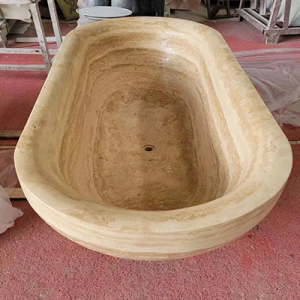
Travertine bathtub of bathroom
Travertine bathtubs are a timeless and elegant addition to any bathroom, showcasing their natural beauty and historical relevance. Travertine bathtubs can be complemented with neutral or bold colors, creating a peaceful and pleasant atmosphere. They can also be paired with other natural materials to create a coherent natural look. They are suitable for classic and timeless bathrooms, modern minimalist spaces, and elegant hotel bathrooms.
Product Description
The Starting Point of Travertine
Mostly found in Italy, Turkey, and Iran, Travertine is a type of limestone that develops in hot springs and limestone cavernues. Italy, especially the quarries close to Rome, boasts the most famous Travertine. For thousands of years, this stone has been employed in building; prominent examples abound from the Roman Colosseum. Particularly travertine bathtubs, travertine’s natural beauty and historical relevance make it a most sought-after material for luxury bathroom fittings.
Textures and Veining
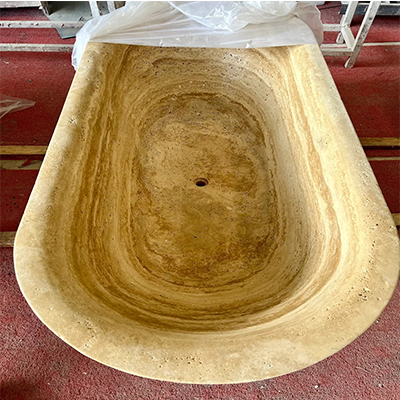
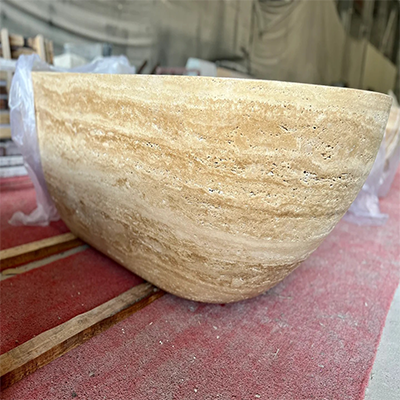
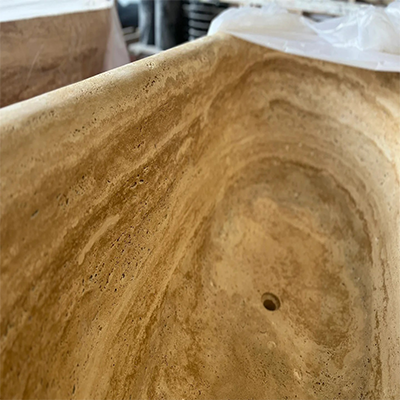
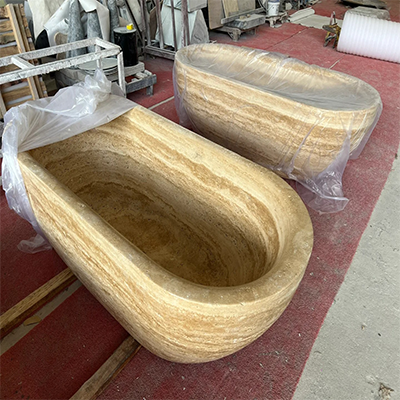
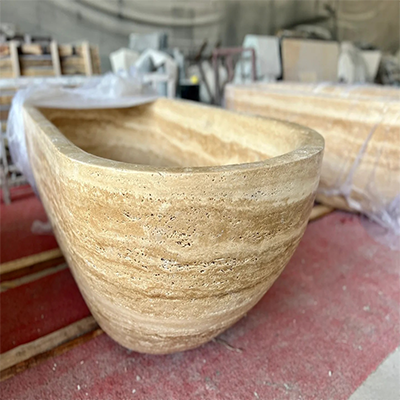
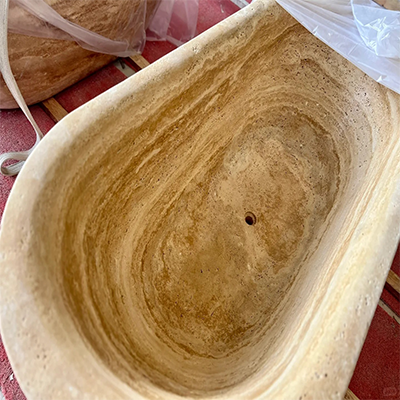
The distinctive texture and veining of travertine—the outcomes of the natural processes during its formation—are well-known. The stone’s porous surface with organic grooves and natural pits lends it a rustic, natural feel. Travertine bathtubs help to retain these qualities, therefore providing a tactile sensation that links you to the natural world. Usually inconspicuous travertine’s veining consists of fine patterns flowing over the surface that give the stone depth and character.
Perfect Color Combining
Neutral Elegance: Travertine’s warm, earthy tones—beige, cream, and taupe—along with other neutral color palettes naturally complement one another. Combining a travertine bathtub with walls in delicate whites, light grays, or soft pastels produces a calm and elegant room. This color mix guarantees a peaceful and pleasant atmosphere while accentuating the inherent beauty of the bathtub.
Contrast with Bold Colors: Match travertine bathtubs with richer, more stunning colors like navy blue, charcoal grey, or emerald green. These striking hues accent the natural texture of the travertine and generate drama. Accents in metallic finishes like brass or chrome can improve visual impact even more.
Complementary Natural Tones: Travertine bathtubs mixed with other natural materials will help to produce a coherent natural look. Travertine’s warm colors complement earthy tones of wood, stone, and flora really nicely. Dark wood vanities or shelves and rich vegetation, for instance, provide the bathroom environment with depth and a bit of nature.
Appropriate Scenarios
Classic and timeless bathrooms: Modern travertine bathtubs provide a timeless look that never goes out of trend for bathrooms featuring a classic design. Their natural stone look fits very nicely with classic cabinets and fittings. Travertine bathtubs exude elegance and permanency whether they surround classic wood accents or are set against marble tiles.
Modern Minimalist Spaces: A solid travertine bathtub is a statement item in modern minimalist bathrooms that strikes a mix between simplicity and elegance. The simple beauty of the bathtub accentuates modern, streamlined fixtures and clear lines. Combining it with monochromatic color schemes and simple décor accentuates its inherent attractiveness while keeping a neat appearance.
Elegant Hotel Bathrooms: Large travertine bathtubs give a sophisticated and unique air for premium hotel suites. High-traffic places would find them perfect because of their elegant look and robust nature. The special patterns of the natural stone offer a sophisticated focal point that improves the whole guest experience and adds to the high-end ambiance.
Why choose a Travertine Bathtub?
Customizable Options: Travertine bathtubs are available in several forms, sizes, and finishes, thereby enabling customizing to match particular design tastes and spatial constraints. Travertine can be customized to fit your ideas, whether your ideal freestanding tub is vintage or modern with built-in style.
Eco-Friendly Choice: Travertine, a naturally occurring stone, is responsibly obtained and a green choice. Its endurance also implies that over time fewer replacements are required, therefore lowering the total environmental effect. Travertine also naturally forms using less energy than synthetic materials.
Natural Beauty: Travertine is a naturally occurring stone having unique textures and patterns. Every bathtub is different and combines earthy tones with natural veining to give any bathroom some grace and class. This natural variance gives a one-of-a-kind centerpiece and improves the visual attractiveness.
Critical Issues
Travertine bathtubs are lovely and robust, but they are some things to think through. A porous stone, travertine, can absorb liquids if improperly sealed. The correct seal of your Travertine bathtub can help to prevent stains and water damage. Travertine is a natural material; hence, it can also be easily etched from acidic compounds. One should pay great care not to expose the stone to acidic agents or use strong cleaners.
Upkeep and care
Preserving the attractiveness of your Travertine bathtub is really easy. To keep the surface free of dirt and grime, advise regular cleaning using a moderate, pH-neutral soap and water. Steer clear of scrubbing pads and aggressive cleaners since they could harm the surface of the stone. Periodically resealing your Travertine bathtub will help to prevent stains and moisture damage. Your Travertine bathtub will remain an amazing focal point in your bathroom for many years with correct care.
FAQs
What is a travertine bathtub and where does the stone come from?
A travertine bathtub is carved from natural travertine, a limestone formed in hot springs and limestone caves. Well-known sources include Italy, Turkey, and Iran, and the material has a long architectural heritage.
Why do travertine bathtubs look different from each other?
Travertine naturally contains pores, organic grooves, and subtle veining formed during deposition. Those natural features vary by block, so each bathtub has its own texture, tone, and character.
Is travertine safe to use in a wet bathroom environment?
Yes, as long as it is properly sealed and maintained. Sealing helps reduce absorption, while routine drying after use helps keep the surface clean and stable in daily bathroom conditions.
Do travertine bathtubs need sealing and resealing?
Yes. Travertine is porous, so sealing is recommended to reduce staining and moisture absorption. Periodic resealing helps maintain protection, especially in high-use bathrooms.
How should I clean a travertine bathtub without damaging it?
Use a soft cloth with mild, pH-neutral soap and water, then rinse and dry. Avoid acidic cleaners, bleach, and abrasive pads, which can dull the finish or cause etching.

 Address: Floor 12, No. 10, Guanyinshan Operation Center, Siming District, Xiamen, Fujian, China
 Email:
  Phone:
  jack@hrststone.com