
Marble Bowls: Investigating Two Colors in Luxury Stonework
Marble bowls are statements of natural beauty and luxury rather than only useful objects. Marble bowls, which are renowned for their elegance, robustness, and unique shapes, have been a preferred choice in upscale homes, especially for luxury kitchens, dining rooms, and even bathrooms. We will explore two different shades of marble bowls in this post, together with their backgrounds, textures, color schemes, suitable décor settings, advantages, care tips, and how to choose the ideal one for your environment.
Origin and texture composition
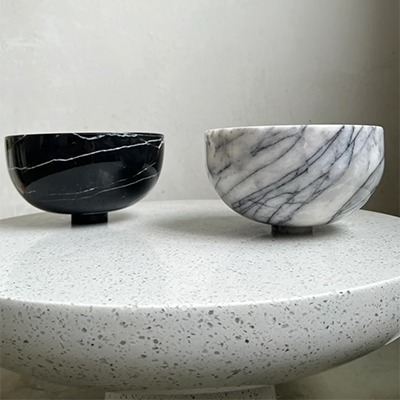
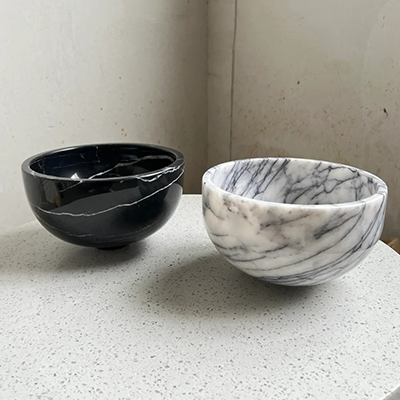
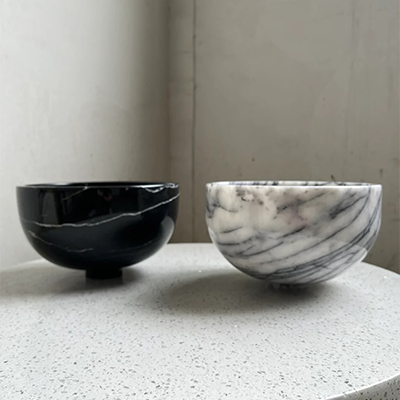
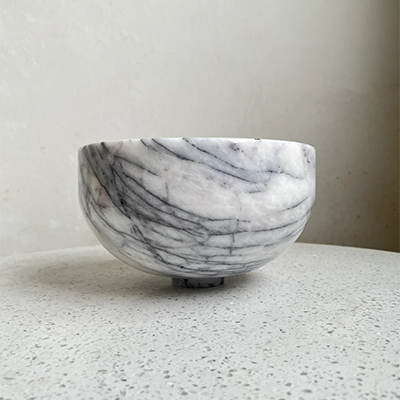
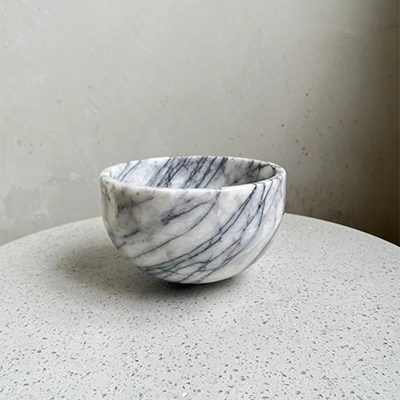
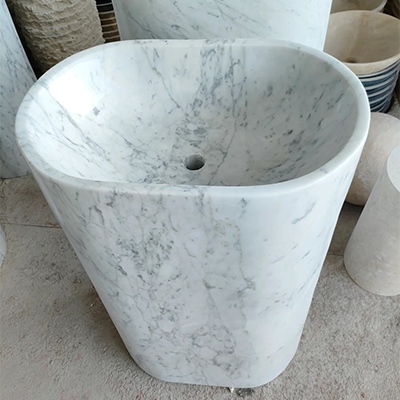
White Marble Bowls: Mostly mined in China, white marble bowls are valued for their smooth white foundation, which is accentuated by complex grey and dark veining that reflects the natural grace of winter landscapes. Chinese creative traditions, whose plum blossoms represent resiliency and rejuvenation, have long connected the organic beauty of the stone with their own creations. Perfect for luxury décor, this marble—crafted into bowls—brings the peace of nature within, therefore invoking both modern sophistication and cultural legacy. Every bowl created from Xiangxue Plum Marble is a singular tribute to the artistic ability of nature, combining ages of workmanship with a classic beauty.
 |
 |
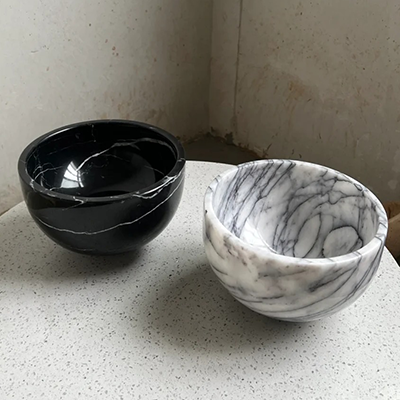 |
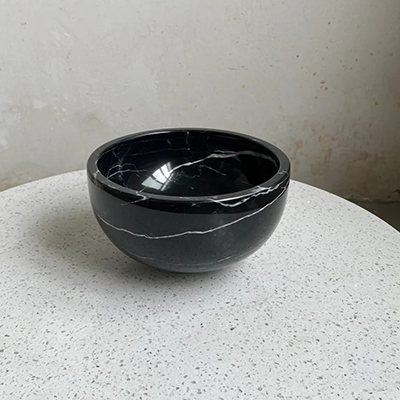
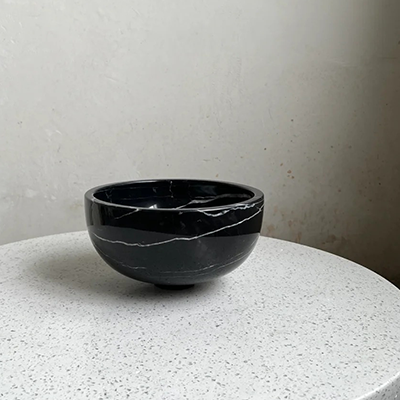
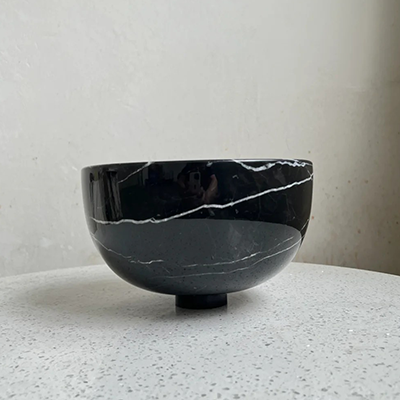
Black Marble Bowls: Commonly referred to as “China Marquina Marble Bowls,” the Black and White Root Marble Bowl comes from a unique kind of marble distinguished by their strong black and white veining. Mostly derived from Chinese quarries, this stone has been prized for its striking, monochromatic patterns that mimic the natural roots of ancient trees straying across the ground. Popular in both modern and classic designs, the complex interaction between the deep black base and the bright white veins produces an arresting visual impact.
Historically, this marble has been employed in Chinese architecture and sculpture to represent harmony between opposites, such as yin and yang, therefore attesting to balance. Formed into a bowl, the Black and White Root Marble presents a sleek but natural aspect and reflects both strength and grace. Every bowl created from this stone is a unique masterwork expressing the unvarnished beauty of nature and bearing a feeling of cultural legacy and artistic excellence.
Color schemes and aesthetic appeal
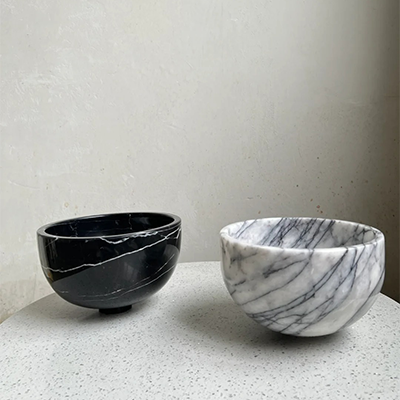
White marble bowls: White marble is quite flexible as part of the neutral color family. It goes nicely with delicate tones, including pastel colors, light grey, and beige. White marble bowls can accentuate glass counters, light wood finishes, or stainless steel fixtures in contemporary bathrooms or kitchens. White marble’s subdued veining gives texture without overpowering other design components, which is perfect for simple or Scandinavian homes.
Black Marble Bowls: By contrast, black marble produces a striking visual impression. Usually, black marble bowls complement strong, rich colors like gold, dark wood, and deep greens. In modern, industrial, or contemporary environments where the intention is to generate contrast and a feeling of luxury, they are ideal. Black marble’s reflecting surface improves room lighting, therefore producing a dynamic interaction between shadow and light.
 |
 |
 |
Appropriate Marble Bowl Locations
Luxury Home Decor: Marble bowls are frequently utilized as focal points in living rooms, dining tables, and doorways. Their elegant look and natural patterns make them perfect for accentuating modern or classical homes with a little luxuries.
Kitchen and Dining: In kitchens and dining areas, these decorative marble bowls could be both ornamental and practical items. They accentuate any lunch scene by holding fruits, presenting salads, or showcasing handcrafted cuisine.
Retail Displays: Marble bowls are common in high-end boutiques and retail establishments showing jewelry, accessories, or little luxury goods. Marble’s elegant appearance improves the products’ visual attractiveness and gives the store a sophisticated environment.
Art galleries and exhibitions: Either as stand-alone sculptures or as part of more extensive works where the inherent beauty of marble is shown in a minimalist or creative setting, marble bowl decor can be shown in art galleries or exhibitions.
 |
 |
 |
Motives behind Selecting Marble Bowls
Unique and one-of-a-kind: Every marble bowl is a one-of-a-kind, unique creation. Marble’s inherent colors and veining patterns guarantee that no two bowls are exactly the same; hence, every piece is a different work of art. The originality of the stone ensures that your marble bowl is as distinctive as your own style, regardless of your preferred modest, delicate veining or stronger pattern.
Functionality Versatility: Marble bowls are quite flexible in addition to being visually beautiful. From decorative centerpieces to utility kitchenware, these bowls have a range of uses. They can carry accessories, show fruit, or even be a serving tray for food. Their resistance to temperature fluctuations and longevity make them perfect for both ornamental and useful purposes.
Eco-Friendly and Sustainable Choice: Marble is a sustainable and environmentally friendly natural resource for home décor. Made from ethically obtained stone, marble bowls have a long lifetime if properly maintained. Marble is a renewable resource that can be used again and again, unlike synthetic materials, which could deteriorate with time, thereby offering an environmentally responsible choice.
Care and Maintenance
Though they are quite strong, marble bowls require certain care to maintain their beauty over time. Marble is porous; hence, it can discolor easily and absorb liquids. Marble bowls should always be cleaned with a soft, wet cloth; do not use powerful chemicals or abrasive scrubbers. For stains, apply a pH-balanced cleaning designed especially for marble. Especially with black marble, it’s important to wipe spills immediately. By eroding their surface, acidic foods, including wine, vinegar, and lemon juice, can irreversibly ruin marble. Over time, a marble bowl could lose luster. Regularly clean your marble bowls with a good marble sealer to restore their luster and prevent stains going forward.
FAQ
1. What are the two main color options for marble bowls, and how do they differ visually?
The two main options are white marble bowls and black marble bowls. White marble bowls usually have a clean, light base with fine grey or darker veining, creating a calm and airy look. Black marble bowls feature a deep dark base with bold white veining, delivering stronger contrast and a more dramatic, statement-style appearance.
2. Which color of marble bowl works best for different interior styles?
White marble bowls fit minimalist, Scandinavian, and light-toned interiors because they blend smoothly with pale woods, glass surfaces, and soft neutrals. Black marble bowls suit modern luxury, industrial, and moody interiors where contrast is a design feature, pairing well with dark wood, metallic accents, and richer color palettes.
3. Where are marble bowls most commonly used in home and commercial styling?
Marble bowls are often used as decorative centerpieces in living rooms, on dining tables, and in entryways to elevate the “first impression” of a space. In kitchens and dining areas, they can hold fruit or serve as display pieces for food presentation. They are also commonly used in upscale retail displays to present accessories, and in gallery-style settings as sculptural décor.
4. Why do people choose marble bowls beyond decoration?
Many buyers choose marble bowls because every piece looks unique due to natural veining, so it feels like a one-of-a-kind design object. They are also versatile, functioning as a catchall, serving piece, or countertop accent. In addition, marble is a natural material that can be positioned as a more durable, longer-life décor choice compared with short-lived synthetic décor items.
5. How do you clean and maintain marble bowls to prevent staining or dullness?
Use a soft damp cloth for daily cleaning and avoid harsh chemicals or abrasive pads. Marble is naturally porous, so wipe spills quickly and be cautious with acidic foods or liquids such as vinegar, lemon juice, or wine, which can etch the surface. Periodic sealing helps protect the finish and makes the bowl easier to maintain over time.


 Address: Floor 12, No. 10, Guanyinshan Operation Center, Siming District, Xiamen, Fujian, China
 Email:
  Phone:
  jack@hrststone.com